
外關 (Wàiguān) — Outer Pass
Triple Energiser channel · point 5
Traditionally used for
- Headaches
- Ears & hearing
- Colds & fever
- Bowel health
- Pain & joints
Location
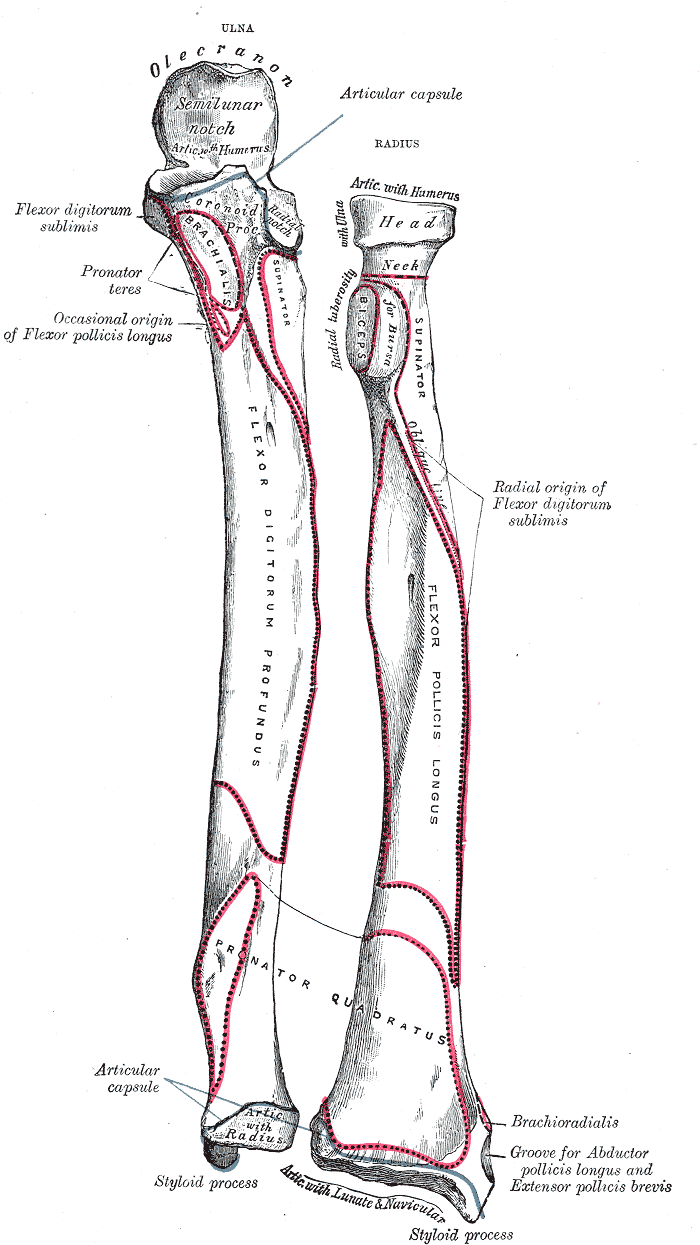
On the dorsal aspect of the forearm, 2 cun proximal to the wrist crease, between the radius and the ulna.
How to locate: With the forearm pronated, find the dorsal wrist crease (gently moving the wrist shows the joint line) and measure 2 cun proximally; the point is in the depression midway between the radius and the ulna, directly opposite PC6. A finger slid up from the wrist between the two bones tends to stop here as the skin bunches in front of it.
Distances are in cun, a proportional unit — how to measure.

Needling
Cited needling
Techniques — the source gives these as alternatives:
-
Slightly oblique insertion — towards the ulnar sideDepth 0.5–1.5 cunskindeeper
-
Oblique insertion — proximal or distal, towards the elbow or wrist respectivelyDepth 0.5–1.5 cunskindeeper
-
Through-needling — to Neiguan PC6
Depths describe average adult habitus in the cited population, never a single safe number for the patient in front of you. Palpate and adjust.
Sources (1)
- Deadman P, Al-Khafaji M, Baker K. A Manual of Acupuncture. Hove: Journal of Chinese Medicine Publications; 1998 — p. 396 Supports: techniques (names this point)
Site notes · not cited
Functions
- Releases the exterior and expels wind-heat
- Opens and regulates the Yang Wei Mai
- Benefits the ears and the head
- Activates the channel and relieves pain of the whole lateral arm
Indications
Balance Method partners
Under Dr. Tan's six systems, TE5 at the forearm balances these channels at the regions its segment images.
-
1. Same Chinese nameGallbladder channelLower leg, Calf · Mirror (arm ↔ leg)Thigh · Reversed mirrorChest, Upper back · Image, head at the hand/footUpper abdomen, Lower back · Image, head toward the elbow/kneeSolve for the Gallbladder channel →
-
2. Branching (Bie Jing / Zang Fu Bie Tong)Kidney channelLower leg, Calf · Mirror (arm ↔ leg)Thigh · Reversed mirrorChest, Upper back · Image, head at the hand/footUpper abdomen, Lower back · Image, head toward the elbow/kneeSolve for the Kidney channel →
-
3. Interior–exterior pairPericardium channelForearm · Same segment, opposite sideChest, Upper back · Image, head at the hand/footUpper abdomen, Lower back · Image, head toward the elbow/kneeSolve for the Pericardium channel →
-
4. Chinese clock oppositeSpleen channelLower leg, Calf · Mirror (arm ↔ leg)Thigh · Reversed mirrorChest, Upper back · Image, head at the hand/footUpper abdomen, Lower back · Image, head toward the elbow/kneeSolve for the Spleen channel →
-
5. Chinese clock neighbourGallbladder channelLower leg, Calf · Mirror (arm ↔ leg)Thigh · Reversed mirrorChest, Upper back · Image, head at the hand/footUpper abdomen, Lower back · Image, head toward the elbow/kneeSolve for the Gallbladder channel →
-
6. Same channelTriple Energiser channelForearm · Same segment, opposite sideChest, Upper back · Image, head at the hand/footUpper abdomen, Lower back · Image, head toward the elbow/kneeSolve for the Triple Energiser channel →
Clinical Notes
Combinations Using This Point
Dai Mai Pair — TE5 and GB41
The opening pair of the Girdling Vessel and Yang Wei — for migraine, the lateral body and premenstrual breast distension.
Balance Method for Sciatica
Sciatic pain treated from the arm — the Small Intestine channel for posterior distribution, the Triple Energiser for lateral — on the opposite side.
Similar Points
Ranked by shared patterns and conditions
Sources
- World Health Organization. WHO Standard Acupuncture Point Locations in the Western Pacific Region. Manila: WHO Regional Office for the Western Pacific, 2008. (Location.)
- Focks C, ed. Atlas of Acupuncture. Edinburgh: Churchill Livingstone Elsevier, 2008. (Locating method and actions.)
📝 Notes
Public notes from the community and your own private notes on TE5 Waiguan.
No notes yet.