
列缺 (Lièquē) — Broken Sequence
Lung channel · point 7
Traditionally used for
- Headaches
- Cough & breathing
- Colds & fever
- Urinary & fluids
- Nerves & recovery
- Pain & joints
Location
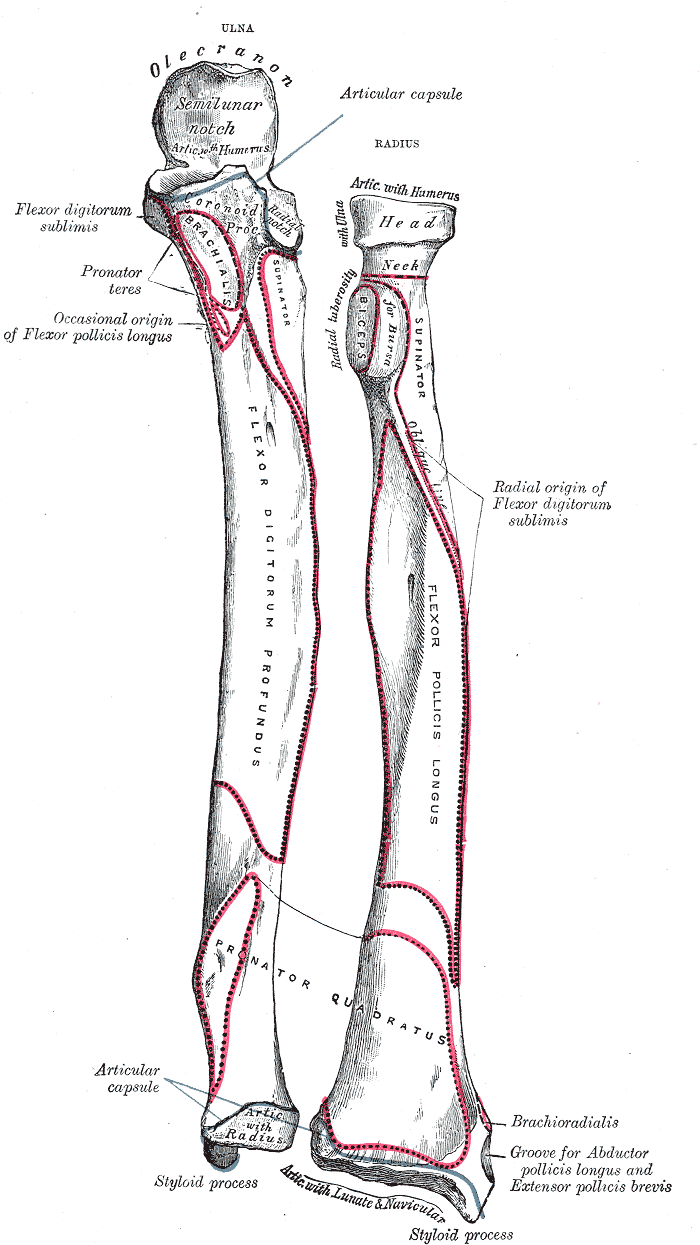
On the radial aspect of the forearm, 1.5 cun proximal to the palmar wrist crease, between the tendons of abductor pollicis longus and extensor pollicis brevis, in the groove for the abductor pollicis longus tendon.
Focks' Atlas of Acupuncture places it directly over the radial styloid process in a V-shaped cleft between the brachioradialis and abductor pollicis longus tendons.
How to locate: Cross the thumb webs of both hands with the index finger of one resting on the styloid process of the other; the fingertip falls near the point. Confirm by measuring 1.5 cun above the wrist crease and feeling for the groove between the abductor pollicis longus and extensor pollicis brevis tendons, which stand out when the thumb is extended.
Regional anatomy: Beneath the skin and subcutaneous tissue the needle passes the tendons of brachioradialis and abductor pollicis longus and reaches pronator quadratus; the superficial branch of the radial nerve and the cephalic vein lie close by.
Distances are in cun, a proportional unit — how to measure.

Needling
Cited needling
- Pregnancy: contraindicated
-
Transverse insertion — in a proximal or distal direction, avoiding the cephalic veinDepth 0.5–1 cunskindeeper
Pinch up the skin over the point with one hand and needle with the other.
Traditionally forbidden in pregnancy (at least before 37 weeks). Carr (2015) reviewed the trials and found no objective evidence of harm from needling these points; the prohibition is traditional, not evidence-based.
Depths describe average adult habitus in the cited population, never a single safe number for the patient in front of you. Palpate and adjust.
Sources (2)
- Carr DJ. The safety of obstetric acupuncture: forbidden points revisited. Acupunct Med. 2015;33(5):413-419 — Identifying sources of concern and relevant outcomes Supports: pregnancy (names this point)
- Deadman P, Al-Khafaji M, Baker K. A Manual of Acupuncture. Hove: Journal of Chinese Medicine Publications; 1998 — p. 83 Supports: techniques (names this point)
Site notes · not cited
Functions
- Releases the exterior and expels wind
- Descends and disseminates Lung qi
- Benefits the head and nape
- Opens and regulates the Ren Mai
- Regulates the water passages
- Opens the channel and luo vessel and alleviates pain
Indications
Balance Method partners
Under Dr. Tan's six systems, LU7 at the forearm balances these channels at the regions its segment images.
-
1. Same Chinese nameSpleen channelLower leg, Calf · Mirror (arm ↔ leg)Thigh · Reversed mirrorChest, Upper back · Image, head at the hand/footUpper abdomen, Lower back · Image, head toward the elbow/kneeSolve for the Spleen channel →
-
2. Branching (Bie Jing / Zang Fu Bie Tong)Bladder channelLower leg, Calf · Mirror (arm ↔ leg)Thigh · Reversed mirrorChest, Upper back · Image, head at the hand/footUpper abdomen, Lower back · Image, head toward the elbow/kneeSolve for the Bladder channel →
-
3. Interior–exterior pairLarge Intestine channelForearm · Same segment, opposite sideChest, Upper back · Image, head at the hand/footUpper abdomen, Lower back · Image, head toward the elbow/kneeSolve for the Large Intestine channel →
-
4. Chinese clock oppositeBladder channelLower leg, Calf · Mirror (arm ↔ leg)Thigh · Reversed mirrorChest, Upper back · Image, head at the hand/footUpper abdomen, Lower back · Image, head toward the elbow/kneeSolve for the Bladder channel →
-
5. Chinese clock neighbourLiver channelLower leg, Calf · Mirror (arm ↔ leg)Thigh · Reversed mirrorChest, Upper back · Image, head at the hand/footUpper abdomen, Lower back · Image, head toward the elbow/kneeSolve for the Liver channel →
-
6. Same channelLung channelForearm · Same segment, opposite sideChest, Upper back · Image, head at the hand/footUpper abdomen, Lower back · Image, head toward the elbow/kneeSolve for the Lung channel →
Clinical Notes
Combinations Using This Point
Ren Mai Pair — LU7 and KI6
The opening pair of the Conception Vessel and Yin Qiao — for dryness of the throat and chest on a background of yin deficiency.
Lieque and Taiyuan
LU7 and LU9, the Luo and Yuan-Source points of the Lung — for cough, wheeze, haemoptysis, headache, sore throat and stiff neck.
Balance Method for Low Back Pain — Lung Channel Image
Low back pain on the Bladder channel treated from the Lung channel of the opposite forearm, with the patient moving the back during retention.
Miriam Lee's Ten Points
Five points needled bilaterally — LI4, LI11, ST36, SP6 and LU7 — as a single restorative prescription for the depleted, overworked patient.
Sources
- World Health Organization. WHO Standard Acupuncture Point Locations in the Western Pacific Region. Manila: WHO Regional Office for the Western Pacific, 2008. (Location.)
- Focks C, ed. Atlas of Acupuncture. Edinburgh: Churchill Livingstone Elsevier, 2008. (Locating method and actions.)
📝 Notes
Public notes from the community and your own private notes on LU7 Lieque.
No notes yet.