
大腸俞 (Dàchángshū) — Large Intestine Shu
Bladder channel · point 25
Traditionally used for
- Digestion
- Bowel health
- Nerves & recovery
- Pain & joints
Location
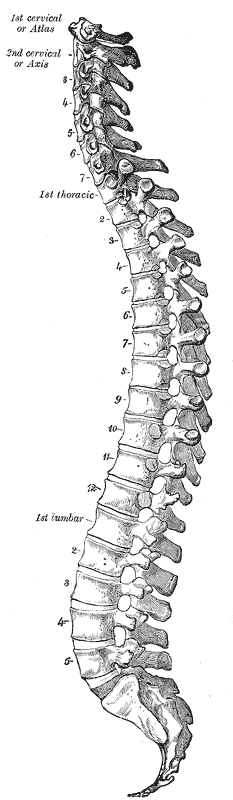
On the lower back, 1.5 cun lateral to the lower border of the spinous process of L4.
How to locate: With the patient prone, rest the hands on the highest points of the iliac crests and bring the thumbs together on the spine; this line usually crosses the L4 spinous process, though it shifts with posture. The point is 1.5 cun lateral to the lower border of L4, level with GV3.
Regional anatomy: Skin, subcutaneous tissue and the thoracolumbar fascia, then erector spinae and quadratus lumborum, with psoas major at depth.
Distances are in cun, a proportional unit — how to measure.
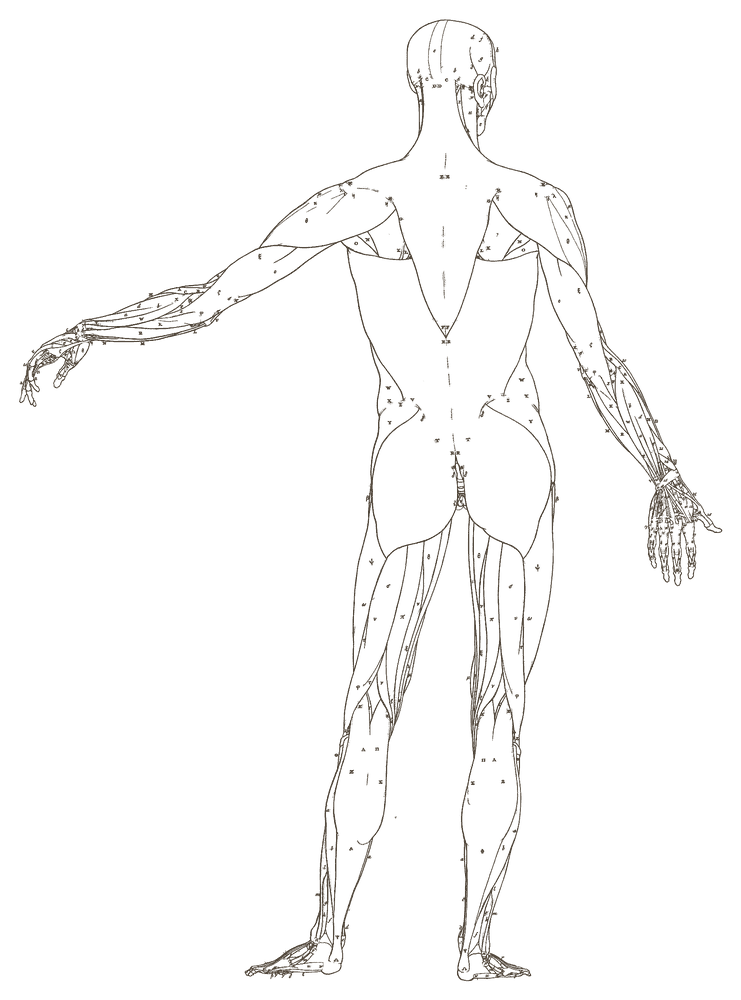
3D view
The 3D view is not available on this device. The 2D maps above show the same point.
Drag, or focus the model and use the arrow keys, to rotate; + and − to zoom; 0 to reset; Esc to close.
Needle diagram for the marked point — a schematic section through the skin, not the model.
3D anatomy: BodyParts3D, © The Database Center for Life Science licensed under CC Attribution 4.0 International (licence). Subset, simplified and recoloured by Verscienta — changes and licence details.
Approximate placement, carried over from our 2D body map onto a single adult male model (BodyParts3D) and checked against the point's location text. Shown on one side of the body. Locate the point on your patient by the location text and palpation, not by this model.
- Cun on this part of the body
- Between the bilateral medial borders of the scapula: 6 B-cun; this scale is half of the 6 B-cun between the two medial borders (posterior midline to one border), 3 B-cun (WHO 2008, General Guidelines, Proportional Bone (Skeletal) Measurements, p. 12).
- Needle angle and depth
-
- Perpendicular (90° to the skin), 1–1.5 cun. Deadman P, Al-Khafaji M, Baker K, p. 287
3D anatomy: BodyParts3D, © The Database Center for Life Science licensed under CC Attribution 4.0 International (licence). Subset, simplified and recoloured by Verscienta — changes and licence details.
Needling
Cited needling
-
Perpendicular insertionDepth 1–1.5 cunskindeeper
Depths describe average adult habitus in the cited population, never a single safe number for the patient in front of you. Palpate and adjust.
Sources (1)
- Deadman P, Al-Khafaji M, Baker K. A Manual of Acupuncture. Hove: Journal of Chinese Medicine Publications; 1998 — p. 287 Supports: techniques (names this point)
Site notes · not cited
Functions
- Regulates the intestines, moves qi and relieves constipation and diarrhoea
- Strengthens the lower back and legs
- Activates the channel
Indications
Clinical Notes
Combinations Using This Point
Similar Points
Ranked by shared patterns and conditions
Sources
- World Health Organization. WHO Standard Acupuncture Point Locations in the Western Pacific Region. Manila: WHO Regional Office for the Western Pacific, 2008. (Location.)
- Focks C, ed. Atlas of Acupuncture. Edinburgh: Churchill Livingstone Elsevier, 2008. (Locating method and actions.)
📝 Notes
Public notes from the community and your own private notes on BL25 Dachangshu.
No notes yet.