
太淵 (Tàiyuān) — Great Abyss
Lung channel · point 9
Traditionally used for
- Cough & breathing
- Heart & circulation
Cautions & contraindications
- Avoid blood vessels
Location
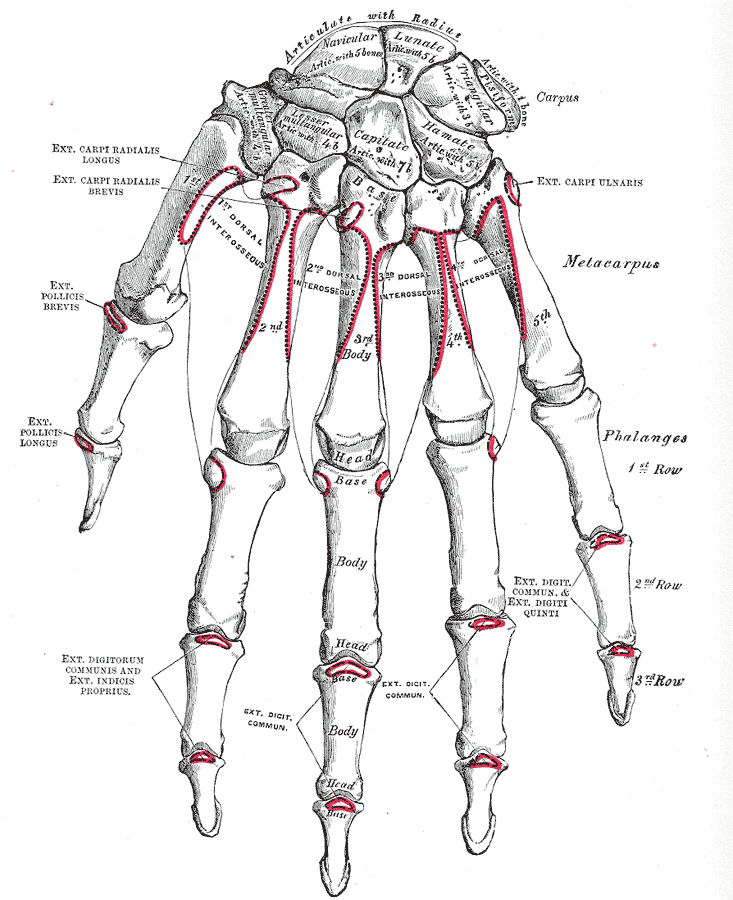
On the anterolateral aspect of the wrist, at the radial end of the palmar wrist crease, between the radial styloid process and the scaphoid bone, in the depression on the ulnar side of the abductor pollicis longus tendon, over the radial artery.
How to locate: At the thumb-side end of the palmar wrist crease, in the hollow between the radial artery and the abductor pollicis longus tendon. Where the crease is indistinct, move the hand loosely to feel the joint space between the radius and the carpal bones and use that level.
Regional anatomy: The needle passes between the cephalic vein and the superficial palmar branch of the radial artery, through the antebrachial fascia just lateral to the radial artery and its veins, down to the radius between the tendons of abductor pollicis longus and flexor carpi radialis.
Distances are in cun, a proportional unit — how to measure.

 Needling hazard — see Needling safety
Needling
Cited needling
- ⚠ Major vessel
-
Perpendicular insertion — avoiding the radial arteryDepth 0.3–0.5 cunskindeeper
Depths describe average adult habitus in the cited population, never a single safe number for the patient in front of you. Palpate and adjust.
Sources (2)
- World Health Organization. Guidelines on basic training and safety in acupuncture. Geneva: WHO; 1999. WHO/EDM/TRM/99.1 — Section II §5.2 (Other points), p. 26 Supports: major vessel (names this point)
- Deadman P, Al-Khafaji M, Baker K. A Manual of Acupuncture. Hove: Journal of Chinese Medicine Publications; 1998 — p. 87 Supports: techniques (names this point)
Site notes · not cited
- Avoid blood vessels
Functions
- Tonifies Lung qi and yin
- Transforms phlegm and descends Lung qi
- Regulates and harmonises the vessels and promotes blood circulation
- Opens the channel and alleviates pain
Indications
Balance Method partners
Under Dr. Tan's six systems, LU9 at the wrist balances these channels at the regions its segment images.
-
1. Same Chinese nameSpleen channelAnkle, Heel · Mirror (arm ↔ leg)Hip & groin, Buttock · Reversed mirrorFront of neck, Nape of neck · Image, head at the hand/footLower abdomen, Sacrum · Image, head toward the elbow/kneeSolve for the Spleen channel →
-
2. Branching (Bie Jing / Zang Fu Bie Tong)Bladder channelAnkle, Heel · Mirror (arm ↔ leg)Hip & groin, Buttock · Reversed mirrorFront of neck, Nape of neck · Image, head at the hand/footLower abdomen, Sacrum · Image, head toward the elbow/kneeSolve for the Bladder channel →
-
3. Interior–exterior pairLarge Intestine channelWrist · Same segment, opposite sideFront of neck, Nape of neck · Image, head at the hand/footLower abdomen, Sacrum · Image, head toward the elbow/kneeSolve for the Large Intestine channel →
-
4. Chinese clock oppositeBladder channelAnkle, Heel · Mirror (arm ↔ leg)Hip & groin, Buttock · Reversed mirrorFront of neck, Nape of neck · Image, head at the hand/footLower abdomen, Sacrum · Image, head toward the elbow/kneeSolve for the Bladder channel →
-
5. Chinese clock neighbourLiver channelAnkle, Heel · Mirror (arm ↔ leg)Hip & groin, Buttock · Reversed mirrorFront of neck, Nape of neck · Image, head at the hand/footLower abdomen, Sacrum · Image, head toward the elbow/kneeSolve for the Liver channel →
-
6. Same channelLung channelWrist · Same segment, opposite sideFront of neck, Nape of neck · Image, head at the hand/footLower abdomen, Sacrum · Image, head toward the elbow/kneeSolve for the Lung channel →
Classical calendar method · 子午流注
When the tables open LU9
The hours Zi Wu Liu Zhu names this point at, by method. Times are the double-hour's start in UTC.
-
辛亥 21:00–23:00 Na Jia Fa, 丁-day sequence · Shu-Stream (俞)
「辛亥太淵神門穴」
Next: Tue 20 Oct, 21:00
-
乙未 13:00–15:00 Na Jia Fa, 辛-day sequence · Yuan-Source (原), returning to the source
「乙未太衝原太淵」
Next: Wed 14 Oct, 13:00
-
卯 05:00–07:00 Na Zi Fa, LU channel · reinforce (補)
「補用卯時,太淵,為俞土,土生金,為母」
Next: Tue 13 Oct, 05:00
A classical reference, not a recommendation: the tables say when the method opens this point, not that it is the point to needle. Open points by the hour →
Clinical Notes
Combinations Using This Point
Lieque and Taiyuan
LU7 and LU9, the Luo and Yuan-Source points of the Lung — for cough, wheeze, haemoptysis, headache, sore throat and stiff neck.
Balance Method for Low Back Pain — Lung Channel Image
Low back pain on the Bladder channel treated from the Lung channel of the opposite forearm, with the patient moving the back during retention.
Similar Points
Ranked by shared patterns and conditions
Sources
- World Health Organization. WHO Standard Acupuncture Point Locations in the Western Pacific Region. Manila: WHO Regional Office for the Western Pacific, 2008. (Location.)
- Focks C, ed. Atlas of Acupuncture. Edinburgh: Churchill Livingstone Elsevier, 2008. (Locating method and actions.)
📝 Notes
Public notes from the community and your own private notes on LU9 Taiyuan.
No notes yet.