
懸鐘 (Xuánzhōng) — Suspended Bell
Gallbladder channel · point 39
Also known as Juegu
Traditionally used for
- Dizziness
- Ears & hearing
- Nose & throat
- Bowel health
- Urinary & fluids
- Nerves & recovery
- Pain & joints
Location
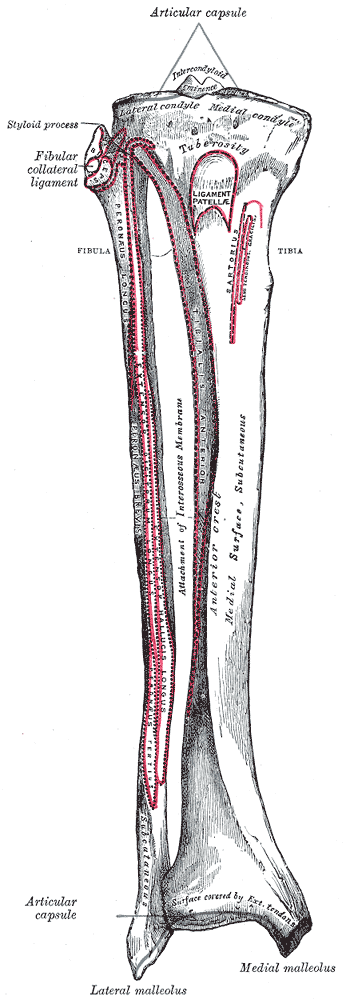
On the fibular (lateral) aspect of the lower leg, 3 cun above the prominence of the lateral malleolus, just anterior to the fibula.
How to locate: Measure 3 cun (one hand's breadth) above the prominence of the lateral malleolus; the point is in the depression at the anterior border of the fibula, at a similar level to SP6 on the inside of the leg.
Distances are in cun, a proportional unit — how to measure.

3D view
3D view not available for this point: its position can't be carried onto the 3D model reliably (it failed a placement check). The 2D maps above show it.
Needling
Cited needling
-
Perpendicular insertion — into the groove between the peroneal tendons and the fibulaDepth 1–1.5 cunskindeeper
Separate the tendons from the fibula with a finger; needle first slightly posteriorly (about 0.5 cun), then perpendicularly, avoiding the bone. Needle this point last and keep the ankle still to avoid bending the needle.
Depths describe average adult habitus in the cited population, never a single safe number for the patient in front of you. Palpate and adjust.
Sources (1)
- Deadman P, Al-Khafaji M, Baker K. A Manual of Acupuncture. Hove: Journal of Chinese Medicine Publications; 1998 — p. 457 Supports: techniques (names this point)
Site notes · not cited
Functions
- Benefits the marrow, the bones and the brain
- Expels wind-damp and relieves neck stiffness
- Clears Gallbladder heat
- Activates the channel and benefits the sinews
Indications
Balance Method partners
Under Dr. Tan's six systems, GB39 at the lower leg balances these channels at the regions its segment images.
-
1. Same Chinese nameTriple Energiser channelForearm · Mirror (arm ↔ leg)Upper arm · Reversed mirrorChest, Upper back · Image, head at the hand/footUpper abdomen, Lower back · Image, head toward the elbow/kneeSolve for the Triple Energiser channel →
-
2. Branching (Bie Jing / Zang Fu Bie Tong)Heart channelForearm · Mirror (arm ↔ leg)Upper arm · Reversed mirrorChest, Upper back · Image, head at the hand/footUpper abdomen, Lower back · Image, head toward the elbow/kneeSolve for the Heart channel →
-
3. Interior–exterior pairLiver channelLower leg, Calf · Same segment, opposite sideChest, Upper back · Image, head at the hand/footUpper abdomen, Lower back · Image, head toward the elbow/kneeSolve for the Liver channel →
-
4. Chinese clock oppositeHeart channelForearm · Mirror (arm ↔ leg)Upper arm · Reversed mirrorChest, Upper back · Image, head at the hand/footUpper abdomen, Lower back · Image, head toward the elbow/kneeSolve for the Heart channel →
-
5. Chinese clock neighbourTriple Energiser channelForearm · Mirror (arm ↔ leg)Upper arm · Reversed mirrorChest, Upper back · Image, head at the hand/footUpper abdomen, Lower back · Image, head toward the elbow/kneeSolve for the Triple Energiser channel →
-
6. Same channelGallbladder channelLower leg, Calf · Same segment, opposite sideChest, Upper back · Image, head at the hand/footUpper abdomen, Lower back · Image, head toward the elbow/kneeSolve for the Gallbladder channel →
Clinical Notes
Combinations Using This Point
Similar Points
Ranked by shared patterns and conditions
Sources
- World Health Organization. WHO Standard Acupuncture Point Locations in the Western Pacific Region. Manila: WHO Regional Office for the Western Pacific, 2008. (Location.)
- Focks C, ed. Atlas of Acupuncture. Edinburgh: Churchill Livingstone Elsevier, 2008. (Locating method and actions.)
📝 Notes
Public notes from the community and your own private notes on GB39 Xuanzhong.
No notes yet.