
命門 (Mìngmén) — Gate of Life
Du (Governing) channel · point 4
Traditionally used for
- Dizziness
- Ears & hearing
- Bowel health
- Urinary & fluids
- Menstrual & women's health
- Fertility & vitality
- Pain & joints
- Energy & fatigue
Location
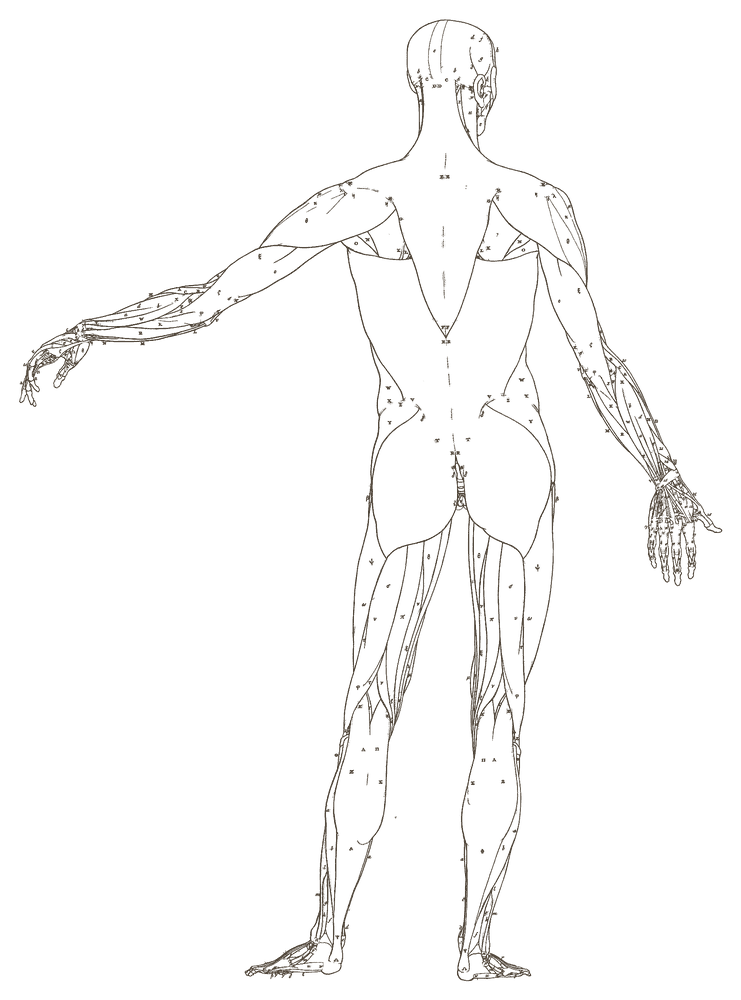
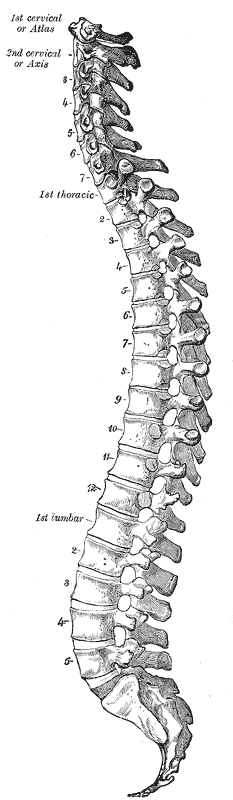
On the lower back, on the posterior midline, in the depression below the spinous process of L2.
How to locate: Find L4 where the line joining the highest points of the iliac crests crosses the spine, then count up two spinous processes to L2; the point is in the depression below it, level with BL23 and BL52.
Regional anatomy: Beneath the skin and subcutaneous tissue the needle passes through the supraspinous and interspinous ligaments toward the ligamentum flavum; beyond it the spinal canal holds the lowest part of the cord and the cauda equina.
Distances are in cun, a proportional unit — how to measure.
Needling
Cited needling
-
Perpendicular insertionDepth 0.5–1 cunskindeeper
Depths describe average adult habitus in the cited population, never a single safe number for the patient in front of you. Palpate and adjust.
Sources (1)
- Deadman P, Al-Khafaji M, Baker K. A Manual of Acupuncture. Hove: Journal of Chinese Medicine Publications; 1998 — p. 537 Supports: techniques (names this point)
Site notes · not cited
Functions
- Tonifies Kidney yang and the source fire
- Strengthens the lower back and knees
- Consolidates the essence
- Benefits the uterus and warms the lower burner
- Regulates the Du Mai and settles wind
Indications
Clinical Notes
Combinations Using This Point
Shenshu, Mingmen and Yaoyangguan
BL23, GV4 and GV3 across the lumbar spine — supports original qi and strengthens the Kidney and lower back.
Ganshu and Mingmen
BL18 with GV4 — strengthens yang, supports essence and original qi and tonifies the Kidney, with the Liver's link to the eyes.
Tonifying Moxibustion — CV4, CV6, ST36 and GV4
The four points that carry the classical reputation for building qi and yang — moxaed rather than needled.
Similar Points
Ranked by shared patterns and conditions
Sources
- World Health Organization. WHO Standard Acupuncture Point Locations in the Western Pacific Region. Manila: WHO Regional Office for the Western Pacific, 2008. (Location.)
- Focks C, ed. Atlas of Acupuncture. Edinburgh: Churchill Livingstone Elsevier, 2008. (Locating method and actions.)
📝 Notes
Public notes from the community and your own private notes on GV4 Mingmen.
No notes yet.