
風池 (Fēngchí) — Wind Pool
Gallbladder channel · point 20
Traditionally used for
- Headaches
- Dizziness
- Eye health
- Ears & hearing
- Nose & throat
- Colds & fever
- Sleep
- Nerves & recovery
- Pain & joints
- Blood pressure
Cautions & contraindications
- No deep needling
Location
On the nape, in the depression between the upper portion of sternocleidomastoid and the upper trapezius, level with GV16.
How to locate: With the patient prone or seated, slide a finger from the midline along the lower border of the occiput, over the bulge of the trapezius, until it sinks into a hollow about the size of a finger pad; the point is in its centre, between sternocleidomastoid and trapezius, level with GV16.
Regional anatomy: Skin and subcutaneous tissue in the hollow between sternocleidomastoid and trapezius, then splenius capitis and semispinalis capitis to rectus capitis posterior major; the vertebral artery and, higher and medially, the foramen magnum and medulla lie deep, which is why the needle is never directed upward or medially.
Distances are in cun, a proportional unit — how to measure.
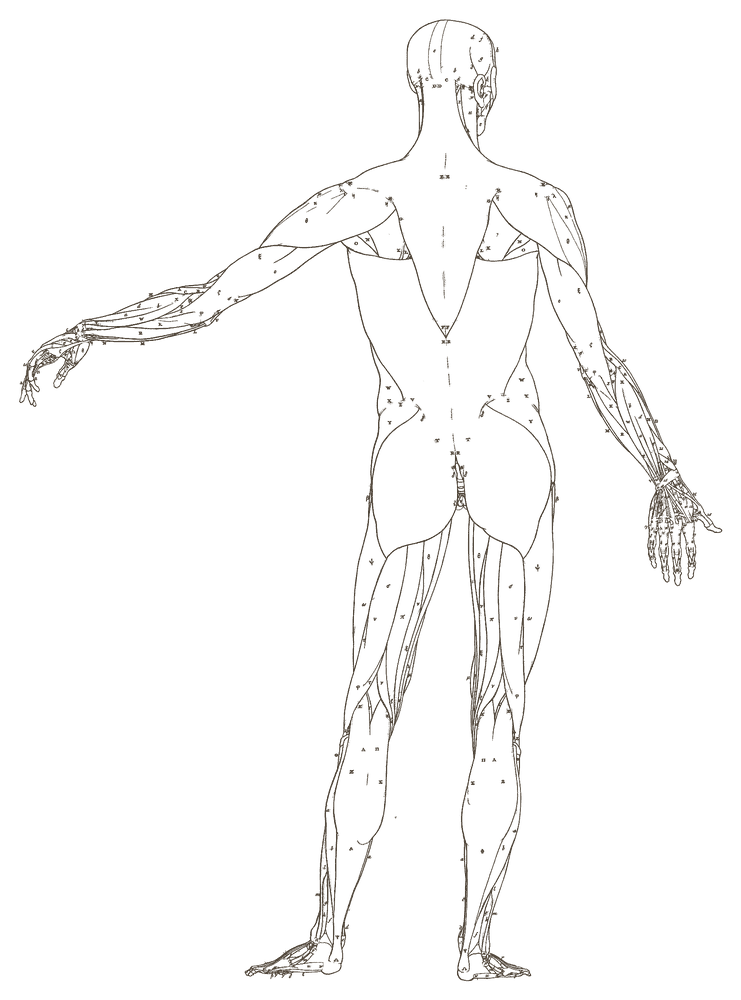
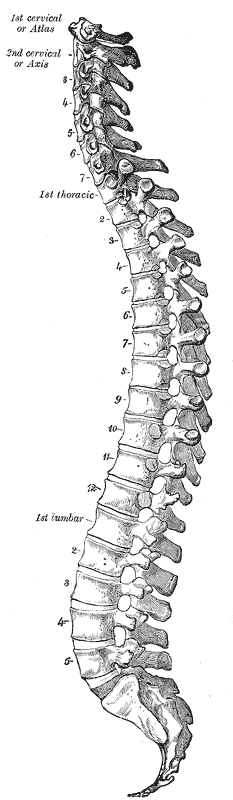 Needling hazard — see Needling safety
3D view
3D view not available for this point: its position on the 3D model couldn't be checked against its location text, so it is not shown. The 2D maps above show it.
- The spinal cord is not drawn: the anatomical model used here does not include it as a surface. This is a limit of the model, not of the anatomy. The spinal cord / medulla risk above still applies.
Needling
Cited needling
- ⚠ Spinal cord / medulla
Techniques — the source gives these as alternatives:
-
Slightly oblique insertion — inferior, in the direction of the channelDepth 1–1.5 cunskindeeper
-
Insertion — directed towards the tip of the nose, the contralateral eyeball or Yintang (M-HN-3)Depth 0.5–1 cunskindeeper
Case reports: central nervous system injury after needling at this point (11 cases in Wu et al. 2015, including a death).
Depths describe average adult habitus in the cited population, never a single safe number for the patient in front of you. Palpate and adjust.
Sources (3)
- Wu J, Hu Y, Zhu Y, Yin P, Litscher G, Xu S. Systematic review of adverse effects: a further step towards modernization of acupuncture in China. Evid Based Complement Alternat Med. 2015;2015:432467 — Table 2 (Central nervous system injury associated with acupuncture) Supports: spinal cord / medulla (case report)
- World Health Organization. Guidelines on basic training and safety in acupuncture. Geneva: WHO; 1999. WHO/EDM/TRM/99.1 — Section II §5.2 (Central nervous system), p. 25 Supports: spinal cord / medulla (names this region)
- Deadman P, Al-Khafaji M, Baker K. A Manual of Acupuncture. Hove: Journal of Chinese Medicine Publications; 1998 — p. 436 Supports: techniques (names this point)
Site notes · not cited
- No deep needling
Functions
- Expels both external and internal wind
- Subdues Liver yang and clears the head
- Benefits the eyes, ears and nose
- Activates the channel and relieves neck pain
Indications
Clinical Notes
Combinations Using This Point
Similar Points
Ranked by shared patterns and conditions
Sources
- World Health Organization. WHO Standard Acupuncture Point Locations in the Western Pacific Region. Manila: WHO Regional Office for the Western Pacific, 2008. (Location.)
- Focks C, ed. Atlas of Acupuncture. Edinburgh: Churchill Livingstone Elsevier, 2008. (Locating method and actions.)
📝 Notes
Public notes from the community and your own private notes on GB20 Fengchi.
No notes yet.