
印堂 (Yìntáng) — Hall of Impression
Extra point · Extra (Head and Neck) · point EX-HN3
Also known as M-HN-3
Traditionally used for
- Headaches
- Dizziness
- Eye health
- Nose & throat
- Sleep
- Mood & calm
- Nerves & recovery
Location
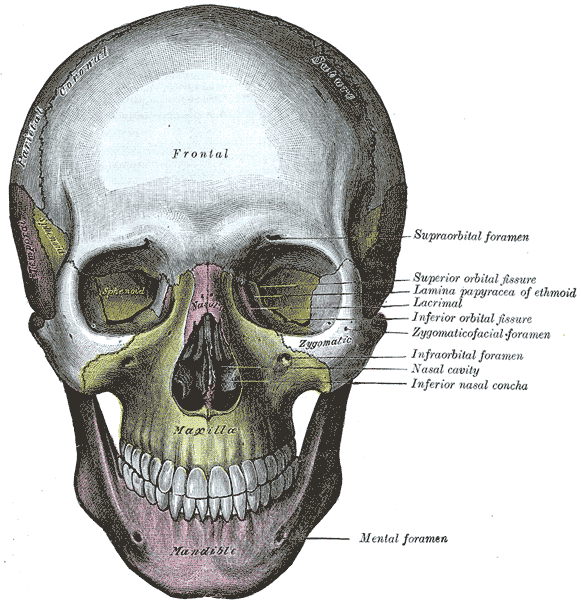
On the forehead, at the midpoint between the medial ends of the two eyebrows.
How to locate: With the patient seated or supine, the point is on the midline of the forehead, exactly halfway between the inner ends of the two eyebrows.
Regional anatomy: Skin and subcutaneous tissue, then procerus and corrugator supercilii down to the periosteum of the frontal bone.
Distances are in cun, a proportional unit — how to measure.
Needling
Functions
- Calms the spirit and relieves anxiety
- Expels wind and opens the nasal passages
- Extinguishes internal wind
- Opens the channel and relieves pain
Indications
Clinical Notes
Combinations Using This Point
Yintang, Yingxiang and Shangyingxiang
Yintang, Yingxiang and Shangyingxiang around the bridge and sides of the nose — a set to expel wind, open the nose, benefit the eyes and relieve pain.
Taiyang and Yintang
Taiyang and Yintang — temple and brow — paired to calm the mind, clear wind-heat from the head and treat facial neuralgia, painful eyes and nosebleed.
Headache — frontal
ST8, Yintang and GV23 locally with LI4 and ST44 distally for forehead and brow pain on the Yangming channels.
Infantile convulsion — acute
Shixuan bled, with Yintang, GV26, LI11 and LV3 reduced, to clear heat, quell wind and revive the child in acute convulsion.
Calming the Spirit — HT7, PC6, Yintang and GV20
The four points most reached for in anxiety and insomnia — two distal, two on the midline of the head.
Rhinorrhea
LU7, LI4, LI20 and Yintang, reduced, to clear lung heat and open the nose in chronic thick nasal discharge.
Infantile convulsion — chronic
CV12, CV4, ST36, LV13 and Yintang with needles and moxa, to strengthen the spleen and stomach in chronic infantile convulsion.
Similar Points
Sources
- Focks C, ed. Atlas of Acupuncture. Edinburgh: Churchill Livingstone Elsevier, 2008. (Locating method and actions.)
Professional contributions
Clinical notes and case studies from verified practitioners, reviewed by our team before they appear. Each entry is one practitioner's report — not editorial content, and not a dosing reference.
No professional contributions yet.
Verified professionals with a live directory listing can share clinical notes and case studies here.
📝 Notes
Public notes from the community and your own private notes on EX-HN3 Yintang.
No notes yet.