
勞宮 (Láogōng) — Palace of Toil
Pericardium channel · point 8
Traditionally used for
- Teeth & mouth
- Digestion
- Mood & calm
- Heart & circulation
Location
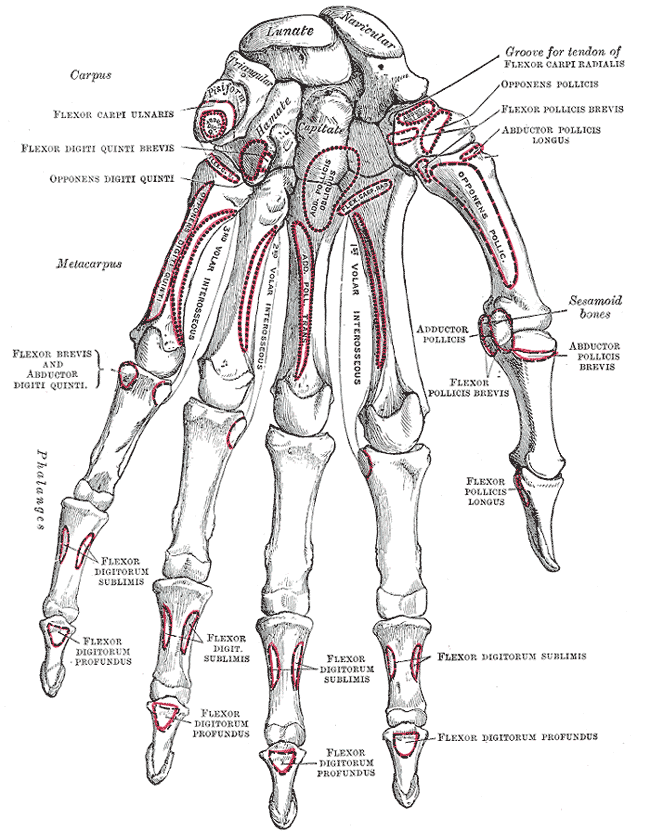
On the palm, between the second and third metacarpal bones, where the tip of the middle finger rests when a fist is made.
How to locate: Have the patient make a loose fist; the point is where the tip of the middle finger rests on the palm, between the second and third metacarpal bones, just proximal to the knuckles.
Regional anatomy: Vessels: the common palmar digital artery. Nerves: the 2nd common palmar digital nerve of the median nerve.
Distances are in cun, a proportional unit — how to measure.
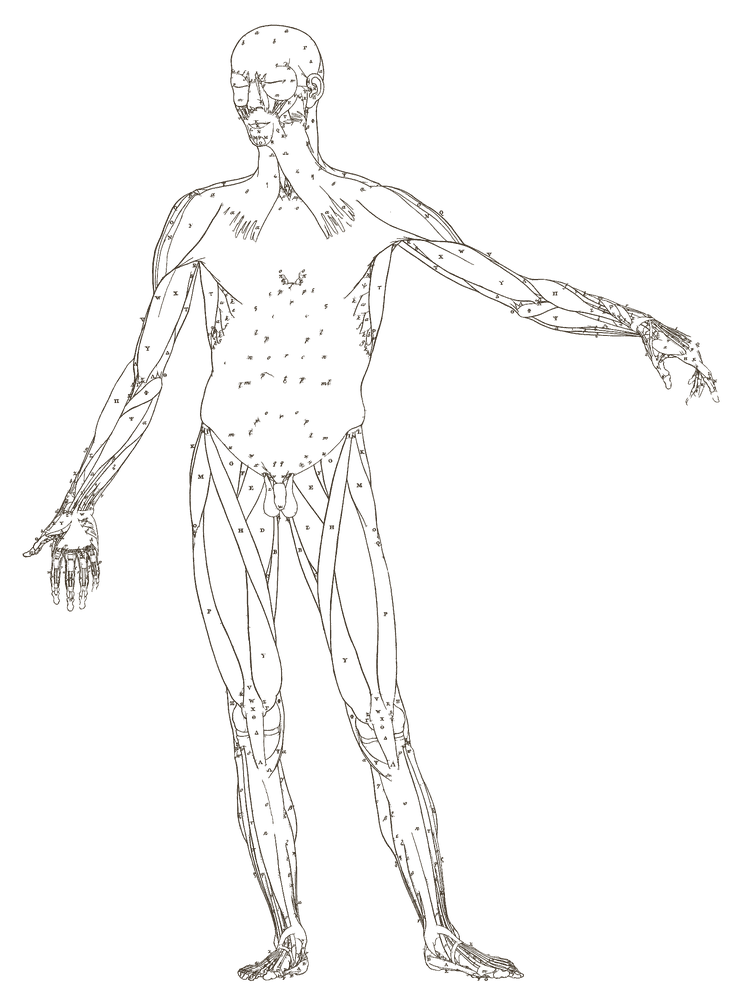
3D view
The 3D view is not available on this device. The 2D maps above show the same point.
Drag, or focus the model and use the arrow keys, to rotate; + and − to zoom; 0 to reset; Esc to close.
No needle can be drawn for this point; see the text below.
3D anatomy: BodyParts3D, © The Database Center for Life Science licensed under CC Attribution 4.0 International (licence). Subset, simplified and recoloured by Verscienta — changes and licence details.
Approximate placement, carried over from our 2D body map onto a single adult male model (BodyParts3D) and checked against the point's location text. Shown on one side of the body. Locate the point on your patient by the location text and palpation, not by this model.
- Needle angle and depth
-
- Perpendicular — not drawn: WHO gives no proportional measurement for this part of the body.
3D anatomy: BodyParts3D, © The Database Center for Life Science licensed under CC Attribution 4.0 International (licence). Subset, simplified and recoloured by Verscienta — changes and licence details.
Needling
Cited needling
-
Perpendicular insertionDepth 0.5–0.5 cunskindeeper
Second source — Beijing College of Traditional Chinese Medicine, et al 1980, p. 215:
-
Perpendicular insertionDepth 0.3–0.5 in (≈8–13 mm)skindeeper
Depths describe average adult habitus in the cited population, never a single safe number for the patient in front of you. Palpate and adjust.
Sources (2)
- Deadman P, Al-Khafaji M, Baker K. A Manual of Acupuncture. Hove: Journal of Chinese Medicine Publications; 1998 — p. 381 Supports: techniques (names this point)
- Beijing College of Traditional Chinese Medicine, et al. Essentials of Chinese Acupuncture. Beijing: Foreign Languages Press; 1980 — p. 215 Supports: techniques (names this point)
Site notes · not cited
Functions
- Clears heat from the Heart and Pericardium
- Calms the spirit and restores consciousness
- Clears heat from the nutritive level and cools the blood
- Harmonises the middle burner
- Clears heat from the mouth and tongue
Indications
Balance Method partners
Under Dr. Tan's six systems, PC8 at the hand balances these channels at the regions its segment images.
-
1. Same Chinese nameLiver channelFoot · Mirror (arm ↔ leg)Head & face, Crown & occiput, Ear · Image, head at the hand/footSolve for the Liver channel →
-
2. Branching (Bie Jing / Zang Fu Bie Tong)Stomach channelFoot · Mirror (arm ↔ leg)Head & face, Crown & occiput, Ear · Image, head at the hand/footSolve for the Stomach channel →
-
3. Interior–exterior pairTriple Energiser channelHand · Same segment, opposite sideHead & face, Crown & occiput, Ear · Image, head at the hand/footSolve for the Triple Energiser channel →
-
4. Chinese clock oppositeStomach channelFoot · Mirror (arm ↔ leg)Head & face, Crown & occiput, Ear · Image, head at the hand/footSolve for the Stomach channel →
-
5. Chinese clock neighbourKidney channelFoot · Mirror (arm ↔ leg)Head & face, Crown & occiput, Ear · Image, head at the hand/footSolve for the Kidney channel →
-
6. Same channelPericardium channelHand · Same segment, opposite sideHead & face, Crown & occiput, Ear · Image, head at the hand/footSolve for the Pericardium channel →
Classical calendar method · 子午流注
When the tables open PC8
The hours Zi Wu Liu Zhu names this point at, by method. Times are the double-hour's start in America/New_York.
-
乙未 13:00–15:00 Na Jia Fa, 乙-day sequence · Na (納) point
「乙未勞宮水穴滎」
Next: Sat 28 Nov, 13:00
A classical reference, not a recommendation: the tables say when the method opens this point, not that it is the point to needle. Open points by the hour →
Combinations Using This Point
Sources
- World Health Organization. WHO Standard Acupuncture Point Locations in the Western Pacific Region. Manila: WHO Regional Office for the Western Pacific, 2008. (Location.)
- Focks C, ed. Atlas of Acupuncture. Edinburgh: Churchill Livingstone Elsevier, 2008. (Locating method and actions.)
- Beijing College of Traditional Chinese Medicine, Shanghai College of Traditional Chinese Medicine, Nanjing College of Traditional Chinese Medicine, Acupuncture Institute of the Academy of Traditional Chinese Medicine. Essentials of Chinese Acupuncture. Beijing: Foreign Languages Press, 1980. (Regional anatomy.)
Professional contributions
Clinical notes and case studies from verified practitioners, reviewed by our team before they appear. Each entry is one practitioner's report — not editorial content, and not a dosing reference.
No professional contributions yet.
Verified professionals with a live directory listing can share clinical notes and case studies here.
📝 Notes
Public notes from the community and your own private notes on PC8 Laogong.
No notes yet.