
委中 (Wěizhōng) — Bend Middle
Bladder channel · point 40
Traditionally used for
- Nose & throat
- Digestion
- Bowel health
- Urinary & fluids
- Pain & joints
- Skin
Cautions & contraindications
- No deep needling
- Avoid blood vessels
Location
At the midpoint of the popliteal crease, between the tendons of biceps femoris and semitendinosus.
How to locate: With the patient prone and the knee slightly flexed to raise the hamstring tendons, the point is at the midpoint of the popliteal crease, midway between the biceps femoris and semitendinosus tendons.
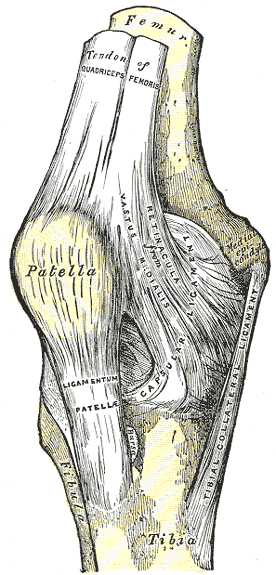
Regional anatomy: Skin and subcutaneous tissue, then the popliteal fascia and fat of the fossa; the tibial nerve, popliteal vein and popliteal artery lie deep in the fossa, so the needle is not thrust vigorously.
Distances are in cun, a proportional unit — how to measure.
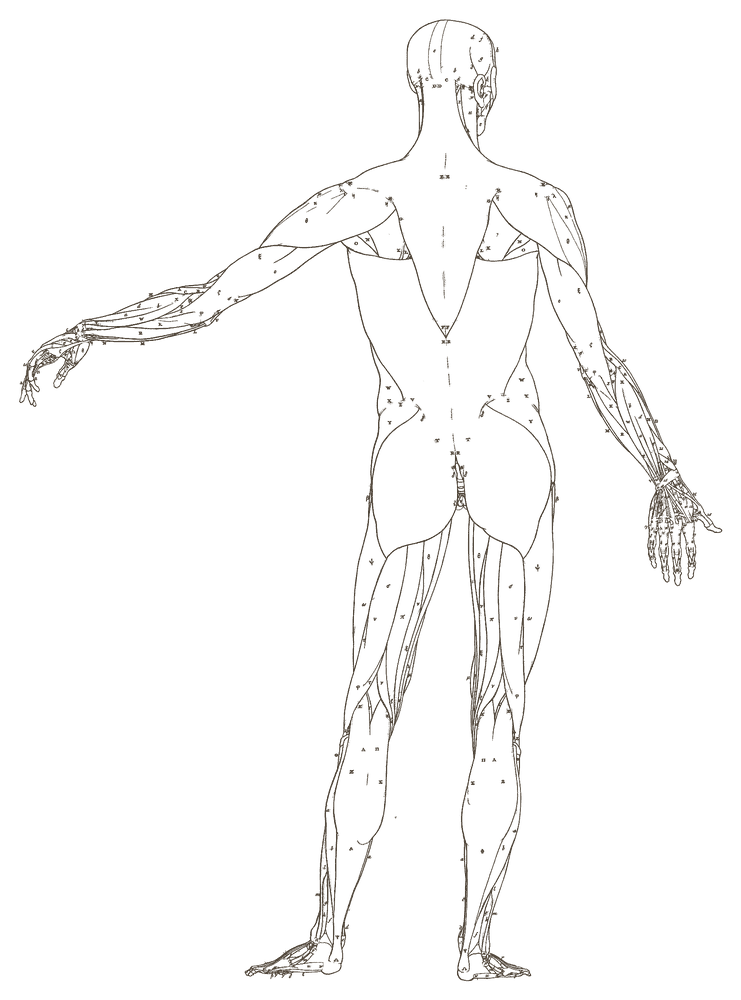
3D view
The 3D view is not available on this device. The 2D maps above show the same point.
Drag, or focus the model and use the arrow keys, to rotate; + and − to zoom; 0 to reset; Esc to close.
No needle can be drawn for this point; see the text below.
3D anatomy: BodyParts3D, © The Database Center for Life Science licensed under CC Attribution 4.0 International (licence). Subset, simplified and recoloured by Verscienta — changes and licence details.
Approximate placement, carried over from our 2D body map onto a single adult male model (BodyParts3D) and checked against the point's location text. Shown on one side of the body. Locate the point on your patient by the location text and palpation, not by this model.
- Needle angle and depth
-
- Perpendicular — not drawn: WHO gives no proportional measurement for this part of the body.
- Prick to bleed, superficial veins — not drawn: no cited depth in cun.
3D anatomy: BodyParts3D, © The Database Center for Life Science licensed under CC Attribution 4.0 International (licence). Subset, simplified and recoloured by Verscienta — changes and licence details.
Needling
Cited needling
Techniques — the source gives these as alternatives:
-
Perpendicular insertionDepth 1–1.5 cunskindeeper
-
Prick to bleed — superficial veins
Depths describe average adult habitus in the cited population, never a single safe number for the patient in front of you. Palpate and adjust.
Sources (1)
- Deadman P, Al-Khafaji M, Baker K. A Manual of Acupuncture. Hove: Journal of Chinese Medicine Publications; 1998 — p. 300 Supports: techniques (names this point)
Site notes · not cited
- No deep needling
- Avoid blood vessels
Functions
- Relieves lumbar pain and activates the whole Bladder channel
- Clears summer-heat and cools the blood
- Resolves damp-heat and benefits the skin
- Relaxes the sinews of the knee
Indications
Balance Method partners
Under Dr. Tan's six systems, BL40 at the back of knee balances these channels at the regions its segment images.
-
1. Same Chinese nameSmall Intestine channelElbow · Mirror (arm ↔ leg)Elbow · Reversed mirrorUpper abdomen, Lower back · Image, head at the hand/footChest, Upper back · Image, head toward the elbow/kneeSolve for the Small Intestine channel →
-
2. Branching (Bie Jing / Zang Fu Bie Tong)Lung channelElbow · Mirror (arm ↔ leg)Elbow · Reversed mirrorUpper abdomen, Lower back · Image, head at the hand/footChest, Upper back · Image, head toward the elbow/kneeSolve for the Lung channel →
-
3. Interior–exterior pairKidney channelKnee, Back of knee · Same segment, opposite sideUpper abdomen, Lower back · Image, head at the hand/footChest, Upper back · Image, head toward the elbow/kneeSolve for the Kidney channel →
-
4. Chinese clock oppositeLung channelElbow · Mirror (arm ↔ leg)Elbow · Reversed mirrorUpper abdomen, Lower back · Image, head at the hand/footChest, Upper back · Image, head toward the elbow/kneeSolve for the Lung channel →
-
5. Chinese clock neighbourSmall Intestine channelElbow · Mirror (arm ↔ leg)Elbow · Reversed mirrorUpper abdomen, Lower back · Image, head at the hand/footChest, Upper back · Image, head toward the elbow/kneeSolve for the Small Intestine channel →
-
6. Same channelBladder channelKnee, Back of knee · Same segment, opposite sideUpper abdomen, Lower back · Image, head at the hand/footChest, Upper back · Image, head toward the elbow/kneeSolve for the Bladder channel →
Classical calendar method · 子午流注
When the tables open BL40
The hours Zi Wu Liu Zhu names this point at, by method. Times are the double-hour's start in UTC.
-
壬午 11:00–13:00 Na Jia Fa, 甲-day sequence · He-Sea (合)
「壬午膀胱委中尋」
Next: Sun 18 Oct, 11:00
A classical reference, not a recommendation: the tables say when the method opens this point, not that it is the point to needle. Open points by the hour →
Clinical Notes
Combinations Using This Point
Weizhong and Chengshan
BL40 and BL57 on the back of the leg — for damp-cold joint pain, low back and leg pain, hemiplegia, haemorrhoids and constipation.
Weizhong and Quze
BL40 and PC3, the He-Sea points of knee and elbow — for heat and toxin: erysipelas, boils, high fever, acute vomiting and diarrhoea, stroke and seizures.
Similar Points
Ranked by shared patterns and conditions
Sources
- World Health Organization. WHO Standard Acupuncture Point Locations in the Western Pacific Region. Manila: WHO Regional Office for the Western Pacific, 2008. (Location.)
📝 Notes
Public notes from the community and your own private notes on BL40 Weizhong.
No notes yet.