
曲澤 (Qūzé) — Marsh at the Bend
Pericardium channel · point 3
Traditionally used for
- Colds & fever
- Digestion
- Bowel health
- Mood & calm
- Nerves & recovery
- Heart & circulation
Cautions & contraindications
- Avoid blood vessels
Location
On the cubital crease, on the ulnar side of the tendon of biceps brachii.
How to locate: With the arm stretched forward, palm up and the elbow slightly flexed, feel the tight biceps tendon at the elbow crease; the point is on the crease just on its ulnar (medial) side.
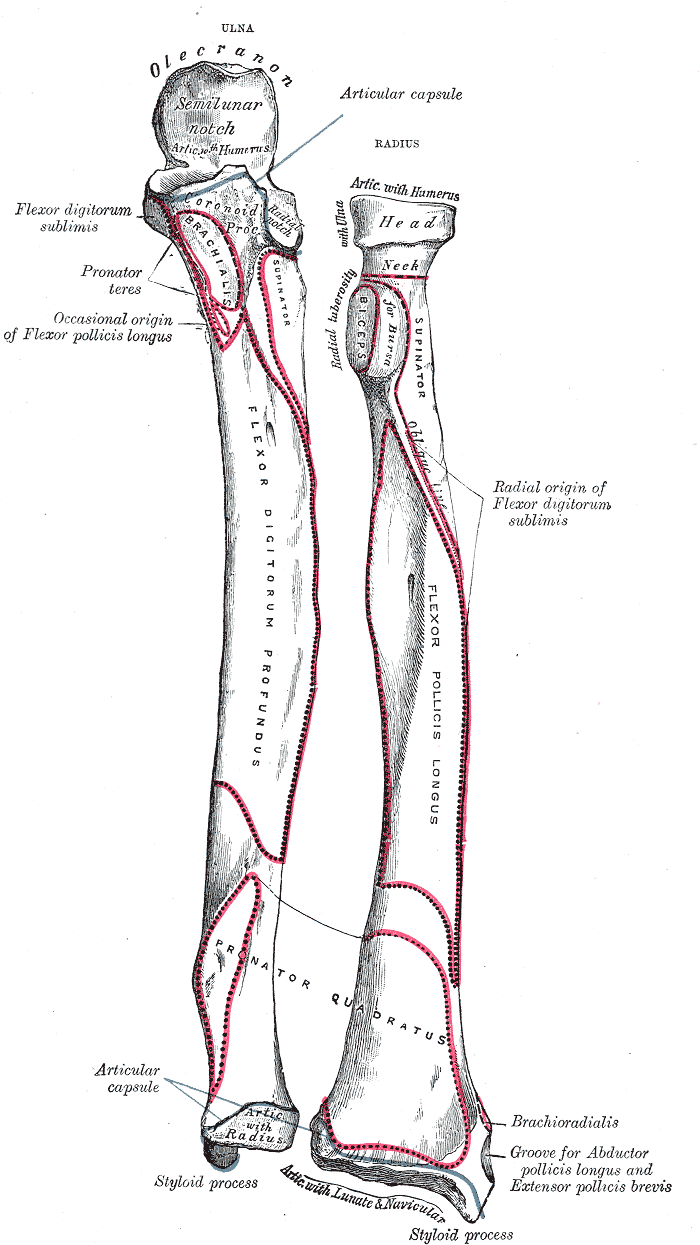
Regional anatomy: The needle passes through the skin, subcutaneous tissue and cubital fascia between the basilic and median cubital veins, reaching brachialis beside the brachial artery; the median nerve lies just medial to the artery.
Distances are in cun, a proportional unit — how to measure.

3D view
3D view not available for this point: its position on the 3D model couldn't be checked against its location text, so it is not shown. The 2D maps above show it.
Needling
Cited needling
Techniques — the source gives these as alternatives:
-
Perpendicular insertionDepth 0.5–1 cunskindeeper
-
Prick to bleed
Depths describe average adult habitus in the cited population, never a single safe number for the patient in front of you. Palpate and adjust.
Sources (1)
- Deadman P, Al-Khafaji M, Baker K. A Manual of Acupuncture. Hove: Journal of Chinese Medicine Publications; 1998 — p. 372 Supports: techniques (names this point)
Site notes · not cited
- Avoid blood vessels
Functions
- Clears heat from the Heart and cools the blood
- Harmonises the Stomach and Intestines and stops vomiting
- Calms the spirit
- Activates the channel and relieves pain
Indications
Balance Method partners
Under Dr. Tan's six systems, PC3 at the elbow balances these channels at the regions its segment images.
-
1. Same Chinese nameLiver channelKnee, Back of knee · Mirror (arm ↔ leg)Knee, Back of knee · Reversed mirrorUpper abdomen, Lower back · Image, head at the hand/footChest, Upper back · Image, head toward the elbow/kneeSolve for the Liver channel →
-
2. Branching (Bie Jing / Zang Fu Bie Tong)Stomach channelKnee, Back of knee · Mirror (arm ↔ leg)Knee, Back of knee · Reversed mirrorUpper abdomen, Lower back · Image, head at the hand/footChest, Upper back · Image, head toward the elbow/kneeSolve for the Stomach channel →
-
3. Interior–exterior pairTriple Energiser channelElbow · Same segment, opposite sideUpper abdomen, Lower back · Image, head at the hand/footChest, Upper back · Image, head toward the elbow/kneeSolve for the Triple Energiser channel →
-
4. Chinese clock oppositeStomach channelKnee, Back of knee · Mirror (arm ↔ leg)Knee, Back of knee · Reversed mirrorUpper abdomen, Lower back · Image, head at the hand/footChest, Upper back · Image, head toward the elbow/kneeSolve for the Stomach channel →
-
5. Chinese clock neighbourKidney channelKnee, Back of knee · Mirror (arm ↔ leg)Knee, Back of knee · Reversed mirrorUpper abdomen, Lower back · Image, head at the hand/footChest, Upper back · Image, head toward the elbow/kneeSolve for the Kidney channel →
-
6. Same channelPericardium channelElbow · Same segment, opposite sideUpper abdomen, Lower back · Image, head at the hand/footChest, Upper back · Image, head toward the elbow/kneeSolve for the Pericardium channel →
Classical calendar method · 子午流注
When the tables open PC3
The hours Zi Wu Liu Zhu names this point at, by method. Times are the double-hour's start in UTC.
-
辛丑 01:00–03:00 Na Jia Fa, 辛-day sequence · Na (納) point
「辛丑曲澤包絡准」
Next: Thu 15 Oct, 01:00
A classical reference, not a recommendation: the tables say when the method opens this point, not that it is the point to needle. Open points by the hour →
Combinations Using This Point
Chize and Quze
LU5 and PC3, the He-Sea points either side of the biceps tendon — for cough, wheeze, sore throat, vomiting and diarrhoea, and elbow spasm.
Weizhong and Quze
BL40 and PC3, the He-Sea points of knee and elbow — for heat and toxin: erysipelas, boils, high fever, acute vomiting and diarrhoea, stroke and seizures.
Sources
- World Health Organization. WHO Standard Acupuncture Point Locations in the Western Pacific Region. Manila: WHO Regional Office for the Western Pacific, 2008. (Location.)
- Focks C, ed. Atlas of Acupuncture. Edinburgh: Churchill Livingstone Elsevier, 2008. (Locating method and actions.)
📝 Notes
Public notes from the community and your own private notes on PC3 Quze.
No notes yet.