
環跳 (Huántiào) — Jumping Round
Gallbladder channel · point 30
Traditionally used for
- Nerves & recovery
- Pain & joints
- Skin
Location
On the buttock, at the junction of the lateral third and medial two-thirds of the line connecting the prominence of the greater trochanter and the sacral hiatus, with the patient side-lying and the hip flexed.
How to locate: Position the patient on their side with the upper hip and knee flexed; locate the prominence of the greater trochanter and the sacral hiatus, and the point is on the line between them, one third of the way from the trochanter.
Regional anatomy: Skin and subcutaneous tissue, then gluteus maximus to the short external rotators of the hip (piriformis down to obturator internus); the sciatic nerve passes deep and medial to the point.
Distances are in cun, a proportional unit — how to measure.
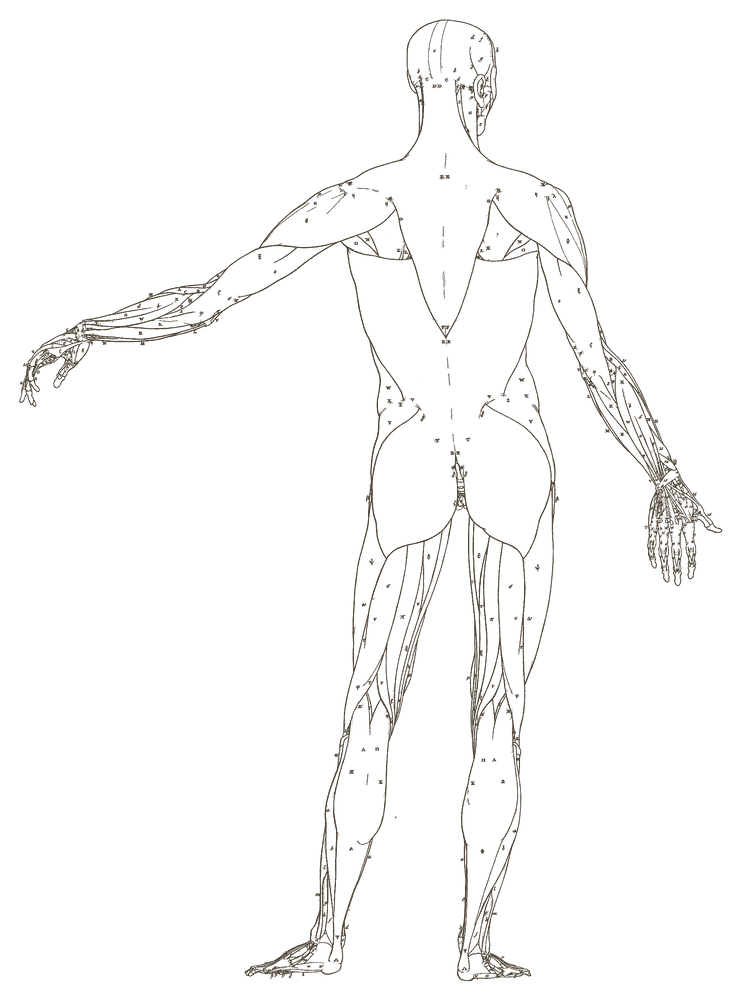
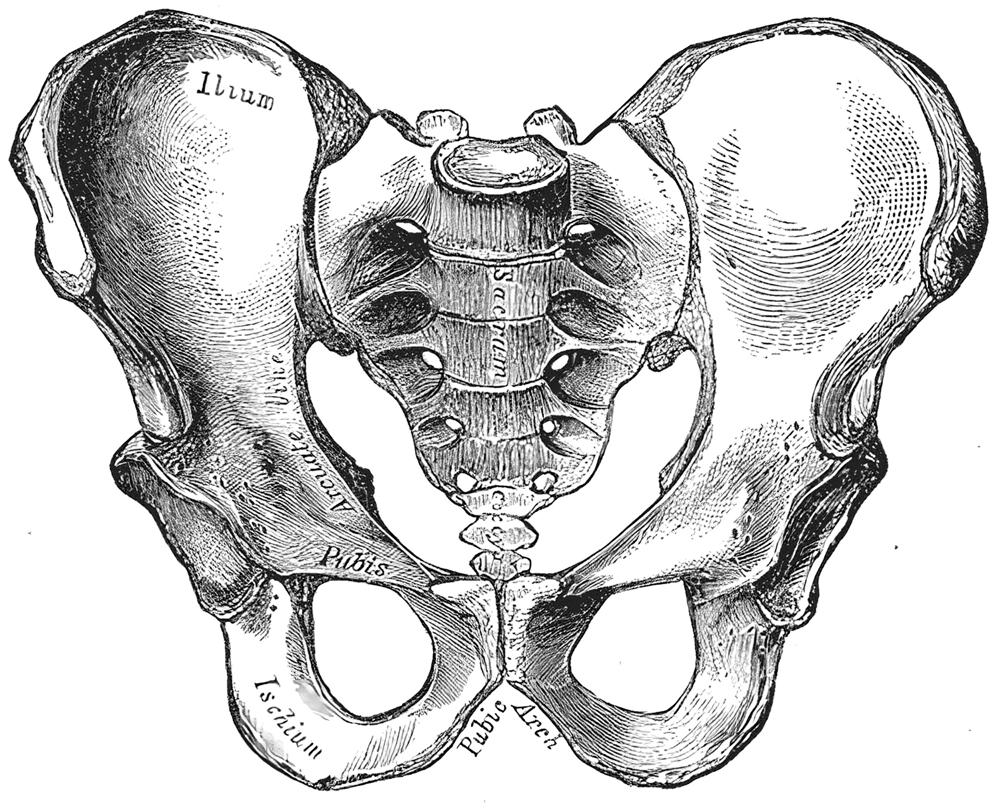
3D view
The 3D view is not available on this device. The 2D maps above show the same point.
Drag, or focus the model and use the arrow keys, to rotate; + and − to zoom; 0 to reset; Esc to close.
No needle can be drawn for this point; see the text below.
3D anatomy: BodyParts3D, © The Database Center for Life Science licensed under CC Attribution 4.0 International (licence). Subset, simplified and recoloured by Verscienta — changes and licence details.
Approximate placement, carried over from our 2D body map onto a single adult male model (BodyParts3D) and checked against the point's location text. Shown on one side of the body. Locate the point on your patient by the location text and palpation, not by this model.
- Needle angle and depth
-
- Perpendicular, directed towards the genitals — not drawn: WHO gives no proportional measurement for this part of the body.
3D anatomy: BodyParts3D, © The Database Center for Life Science licensed under CC Attribution 4.0 International (licence). Subset, simplified and recoloured by Verscienta — changes and licence details.
Needling
Cited needling
- ⚠ Nerve
-
Perpendicular insertion — directed towards the genitalsDepth 2–3.5 cunskindeeper
Second source — Beijing College of Traditional Chinese Medicine, et al 1980, p. 241:
-
Perpendicular insertionDepth 1.5–2.5 in (≈38–64 mm)skindeeper
Case reports: peripheral nerve injury after needling at this point (1 case in Wu et al. 2015).
Depths describe average adult habitus in the cited population, never a single safe number for the patient in front of you. Palpate and adjust.
Sources (3)
- Wu J, Hu Y, Zhu Y, Yin P, Litscher G, Xu S. Systematic review of adverse effects: a further step towards modernization of acupuncture in China. Evid Based Complement Alternat Med. 2015;2015:432467 — Table 3 (Peripheral nerve injury) Supports: nerve (case report)
- Deadman P, Al-Khafaji M, Baker K. A Manual of Acupuncture. Hove: Journal of Chinese Medicine Publications; 1998 — p. 447 Supports: techniques (names this point)
- Beijing College of Traditional Chinese Medicine, et al. Essentials of Chinese Acupuncture. Beijing: Foreign Languages Press; 1980 — p. 241 Supports: techniques (names this point)
Site notes · not cited
Functions
- Activates the channel and relieves sciatic pain
- Expels wind and damp from the hip and leg
- Benefits the hip joint
Indications
Balance Method partners
Under Dr. Tan's six systems, GB30 at the buttock balances these channels at the regions its segment images.
-
1. Same Chinese nameTriple Energiser channelShoulder · Mirror (arm ↔ leg)Wrist · Reversed mirrorSolve for the Triple Energiser channel →
-
2. Branching (Bie Jing / Zang Fu Bie Tong)Heart channelShoulder · Mirror (arm ↔ leg)Wrist · Reversed mirrorSolve for the Heart channel →
-
3. Interior–exterior pairLiver channelHip & groin, Buttock · Same segment, opposite sideSolve for the Liver channel →
-
4. Chinese clock oppositeHeart channelShoulder · Mirror (arm ↔ leg)Wrist · Reversed mirrorSolve for the Heart channel →
-
5. Chinese clock neighbourTriple Energiser channelShoulder · Mirror (arm ↔ leg)Wrist · Reversed mirrorSolve for the Triple Energiser channel →
-
6. Same channelGallbladder channelHip & groin, Buttock · Same segment, opposite sideSolve for the Gallbladder channel →
Clinical Notes
Combinations Using This Point
Huantiao and Chengfu
GB30 and BL36 at the buttock and gluteal fold — for low back and leg pain, sciatica, leg weakness and numbness, and hemiplegia.
Bi syndrome — hip
GB30, BL37 and GB29 around the hip, for bi pain of the hip joint.
Wei syndrome — lower limb
ST31, ST36, ST41, GB30, GB34 and GB39 along the leg, for flaccid weakness or wasting of the lower limb.
Windstroke — hemiplegia
GV20, GV16 and BL7 with yang-channel points of the arm (LI15, LI11, TE5, LI4) and leg (GB30, GB34, ST36, ST41) for paralysis after windstroke.
Sources
- World Health Organization. WHO Standard Acupuncture Point Locations in the Western Pacific Region. Manila: WHO Regional Office for the Western Pacific, 2008. (Location.)
- Focks C, ed. Atlas of Acupuncture. Edinburgh: Churchill Livingstone Elsevier, 2008. (Locating method and actions.)
Professional contributions
Clinical notes and case studies from verified practitioners, reviewed by our team before they appear. Each entry is one practitioner's report — not editorial content, and not a dosing reference.
No professional contributions yet.
Verified professionals with a live directory listing can share clinical notes and case studies here.
📝 Notes
Public notes from the community and your own private notes on GB30 Huantiao.
No notes yet.