
小腸俞 (Xiǎochángshū) — Small Intestine Shu
Bladder channel · point 27
Traditionally used for
- Digestion
- Bowel health
- Urinary & fluids
- Menstrual & women's health
- Pain & joints
Location
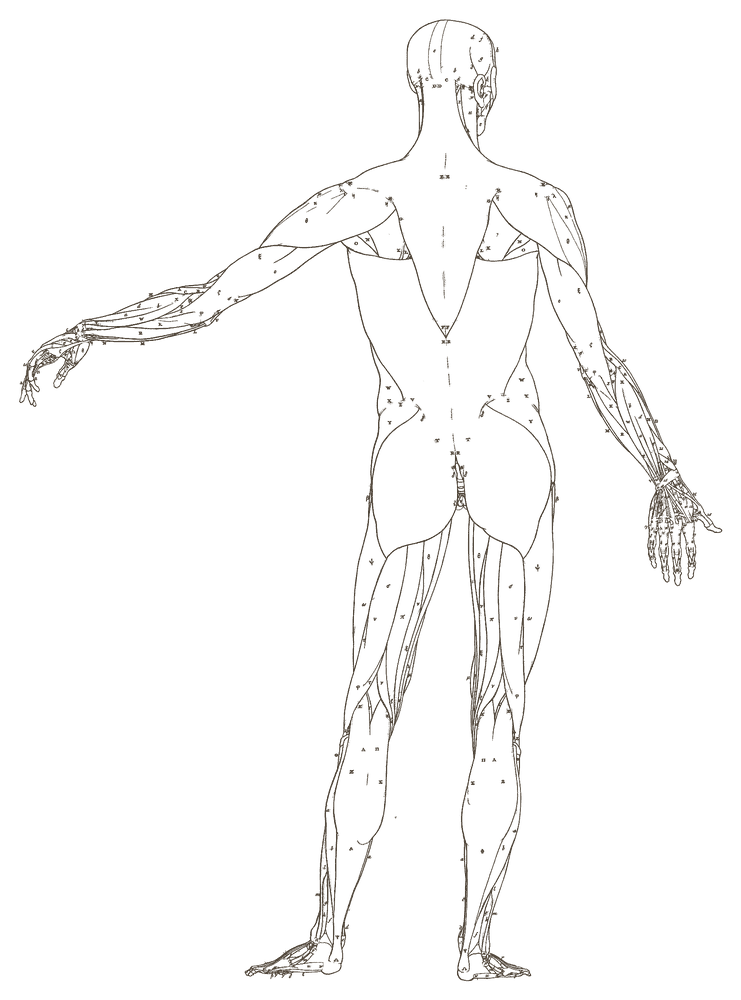
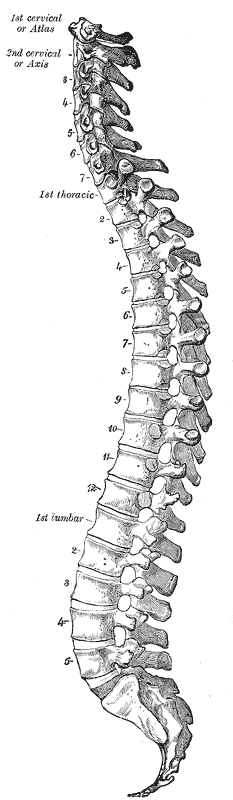
On the sacrum, 1.5 cun lateral to the midline, level with the first posterior sacral foramen and BL31.
How to locate: With the patient prone, find the posterior superior iliac spine by palpating about one handbreadth up and out at 45 degrees from the top of the gluteal cleft until a distinct bony ridge is felt, often marked by a skin dimple. The spine is level with the second posterior sacral foramen; move up one foramen. The point is 1.5 cun lateral to the median sacral crest at the level of the first foramen, slightly above and medial to the iliac spine.
Regional anatomy: Skin, subcutaneous tissue and the thoracolumbar aponeurosis, then the sacral origin of erector spinae, at the medial edge of gluteus maximus.
Distances are in cun, a proportional unit — how to measure.
3D view
3D view not available for this point: its position on the 3D model couldn't be checked against its location text, so it is not shown. The 2D maps above show it.
Needling
Cited needling
- Pregnancy: contraindicated
-
Perpendicular insertionDepth 0.5–1 cunskindeeper
Traditionally forbidden in pregnancy (at least before 37 weeks). Carr (2015) reviewed the trials and found no objective evidence of harm from needling these points; the prohibition is traditional, not evidence-based.
Depths describe average adult habitus in the cited population, never a single safe number for the patient in front of you. Palpate and adjust.
Sources (3)
- Carr DJ. The safety of obstetric acupuncture: forbidden points revisited. Acupunct Med. 2015;33(5):413-419 — Identifying sources of concern and relevant outcomes Supports: pregnancy (names this point)
- World Health Organization. Guidelines on basic training and safety in acupuncture. Geneva: WHO; 1999. WHO/EDM/TRM/99.1 — Section II §2.1 (Pregnancy), p. 20 Supports: pregnancy (names this region)
- Deadman P, Al-Khafaji M, Baker K. A Manual of Acupuncture. Hove: Journal of Chinese Medicine Publications; 1998 — p. 289 Supports: techniques (names this point)
Site notes · not cited
Functions
- Regulates and tonifies the Small Intestine and separates the clear from the turbid
- Drains dampness and clears damp-heat from the lower burner
- Regulates the water passages
Indications
Combinations Using This Point
Sources
- World Health Organization. WHO Standard Acupuncture Point Locations in the Western Pacific Region. Manila: WHO Regional Office for the Western Pacific, 2008. (Location.)
- Focks C, ed. Atlas of Acupuncture. Edinburgh: Churchill Livingstone Elsevier, 2008. (Locating method and actions.)
📝 Notes
Public notes from the community and your own private notes on BL27 Xiaochangshu.
No notes yet.