
肩髎 (Jiānliáo) — Shoulder Bone-Hole
Triple Energiser channel · point 14
Traditionally used for
- Nerves & recovery
- Pain & joints
- Skin
Location
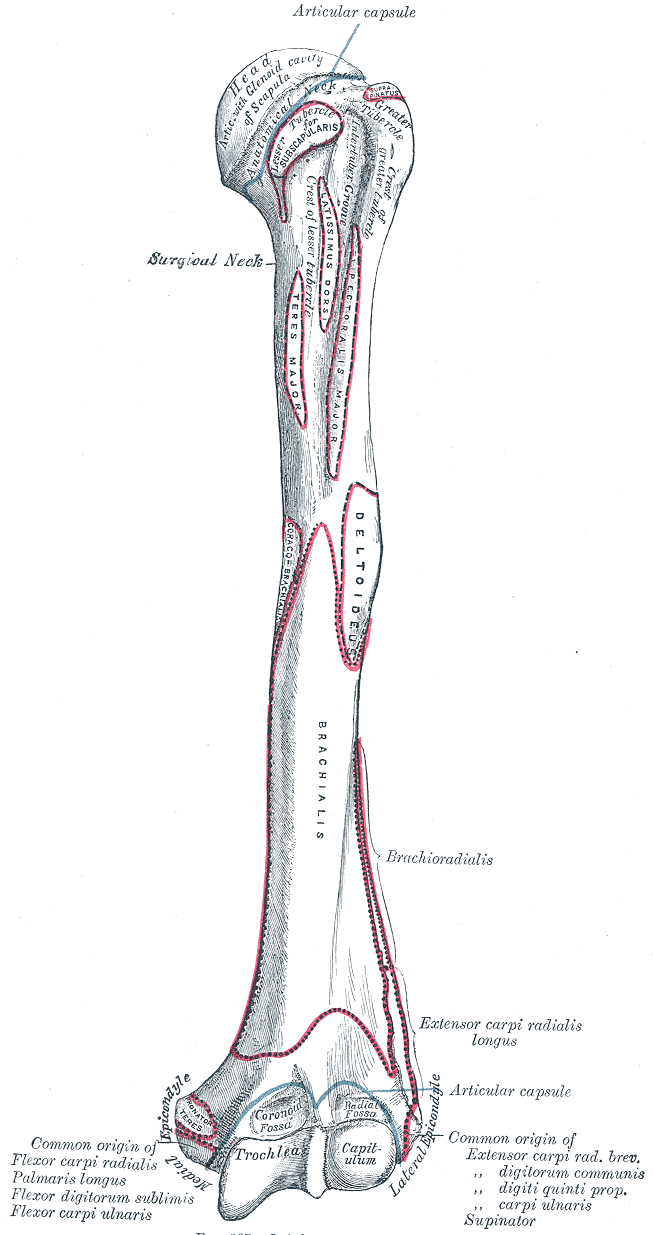
On the shoulder, in the depression between the acromial angle and the greater tubercle of the humerus, appearing posterior to the acromion when the arm is abducted — posterior to LI15.
How to locate: Abduct the arm to shoulder level and two hollows appear below the acromion: the anterior one is LI15 and the posterior one, behind and below the acromion, is this point.
Regional anatomy: Beneath the skin and subcutaneous tissue the needle passes through the posterior deltoid into teres minor, with teres major below; the axillary nerve and posterior circumflex humeral vessels run close by.
Distances are in cun, a proportional unit — how to measure.

3D view
3D view not available for this point: its position on the 3D model couldn't be checked against its location text, so it is not shown. The 2D maps above show it.
Needling
Cited needling
Techniques — the source gives these as alternatives:
-
Perpendicular insertion — directed towards the centre of the axillaDepth 1–1.5 cunskindeeper
With the arm abducted.
-
Transverse-oblique insertion — directed distally towards the elbowDepth 1.5–2 cunskindeeper
Depths describe average adult habitus in the cited population, never a single safe number for the patient in front of you. Palpate and adjust.
Sources (1)
- Deadman P, Al-Khafaji M, Baker K. A Manual of Acupuncture. Hove: Journal of Chinese Medicine Publications; 1998 — p. 405 Supports: techniques (names this point)
Site notes · not cited
Functions
- Expels wind and damp from the shoulder
- Activates the channel and benefits the joint
Indications
Balance Method partners
Under Dr. Tan's six systems, TE14 at the shoulder balances these channels at the regions its segment images.
-
1. Same Chinese nameGallbladder channelHip & groin, Buttock · Mirror (arm ↔ leg)Ankle, Heel · Reversed mirrorSolve for the Gallbladder channel →
-
2. Branching (Bie Jing / Zang Fu Bie Tong)Kidney channelHip & groin, Buttock · Mirror (arm ↔ leg)Ankle, Heel · Reversed mirrorSolve for the Kidney channel →
-
3. Interior–exterior pairPericardium channelShoulder · Same segment, opposite sideSolve for the Pericardium channel →
-
4. Chinese clock oppositeSpleen channelHip & groin, Buttock · Mirror (arm ↔ leg)Ankle, Heel · Reversed mirrorSolve for the Spleen channel →
-
5. Chinese clock neighbourGallbladder channelHip & groin, Buttock · Mirror (arm ↔ leg)Ankle, Heel · Reversed mirrorSolve for the Gallbladder channel →
-
6. Same channelTriple Energiser channelShoulder · Same segment, opposite sideSolve for the Triple Energiser channel →
Clinical Notes
Combinations Using This Point
Similar Points
Sources
- World Health Organization. WHO Standard Acupuncture Point Locations in the Western Pacific Region. Manila: WHO Regional Office for the Western Pacific, 2008. (Location.)
📝 Notes
Public notes from the community and your own private notes on TE14 Jianliao.
No notes yet.