
下關 (Xiàguān) — Below the Joint
Stomach channel · point 7
Traditionally used for
- Ears & hearing
- Teeth & mouth
- Nerves & recovery
- Pain & joints
Location
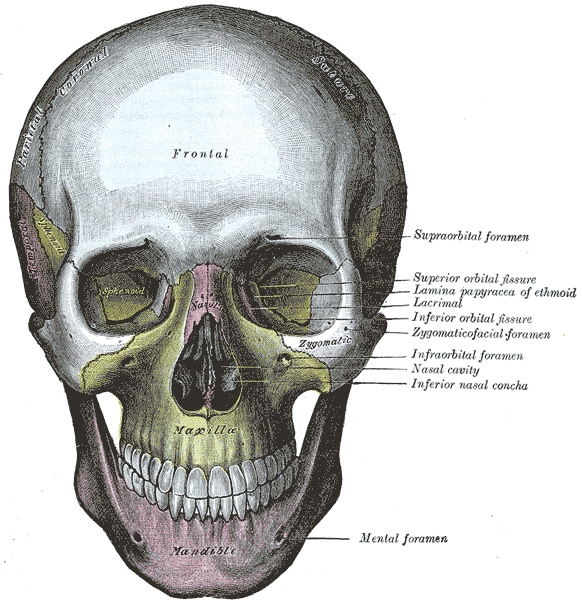
On the face, in the depression between the midpoint of the inferior border of the zygomatic arch and the mandibular notch, directly below GB3, found with the mouth closed.
How to locate: With the mouth closed, run a finger along the lower border of the zygomatic arch toward the ear; the point is in the distinct hollow just in front of the temporomandibular joint, directly below GB3. When the mouth opens wide the condyle slides forward and fills the hollow, so locate and needle with the mouth shut.
Regional anatomy: The needle passes through the parotid gland and masseter and through the mandibular notch toward lateral pterygoid in the infratemporal fossa; the maxillary artery runs deep in this space.
Distances are in cun, a proportional unit — how to measure.

3D view
3D view not available for this point: its position can't be carried onto the 3D model reliably (it failed a placement check). The 2D maps above show it.
Needling
Cited needling
Techniques — the source gives these as alternatives:
-
Perpendicular insertion — slightly inferiorlyDepth 0.5–1 cunskindeeper
-
Transverse insertion — to join with such points as Tinggong SI19, Jiache ST6, Quanliao SI18 etc. for diseases of the ear, teeth, face and jaw
Depths describe average adult habitus in the cited population, never a single safe number for the patient in front of you. Palpate and adjust.
Sources (1)
- Deadman P, Al-Khafaji M, Baker K. A Manual of Acupuncture. Hove: Journal of Chinese Medicine Publications; 1998 — p. 134 Supports: techniques (names this point)
Site notes · not cited
Functions
- Benefits the ears and the jaw joint
- Benefits the teeth
- Expels wind and relieves pain
Indications
Clinical Notes
Combinations Using This Point
Taiyang, Xiaguan and Daying
Taiyang, Xiaguan and Daying across the side of the face — a set to expel wind, reduce facial swelling and relieve headache, dizziness and facial deviation.
Dicang, Jiache, Xiaguan and Yangbai
Dicang, Jiache, Xiaguan and Yangbai — mouth corner, jaw, joint and forehead — a four-point facial set to expel wind, stop pain and open the channels and collaterals.
Sources
- World Health Organization. WHO Standard Acupuncture Point Locations in the Western Pacific Region. Manila: WHO Regional Office for the Western Pacific, 2008. (Location.)
- Focks C, ed. Atlas of Acupuncture. Edinburgh: Churchill Livingstone Elsevier, 2008. (Locating method and actions.)
📝 Notes
Public notes from the community and your own private notes on ST7 Xiaguan.
No notes yet.