
Traditionally used for
- Teeth & mouth
- Nerves & recovery
Cautions & contraindications
- Avoid blood vessels
Location
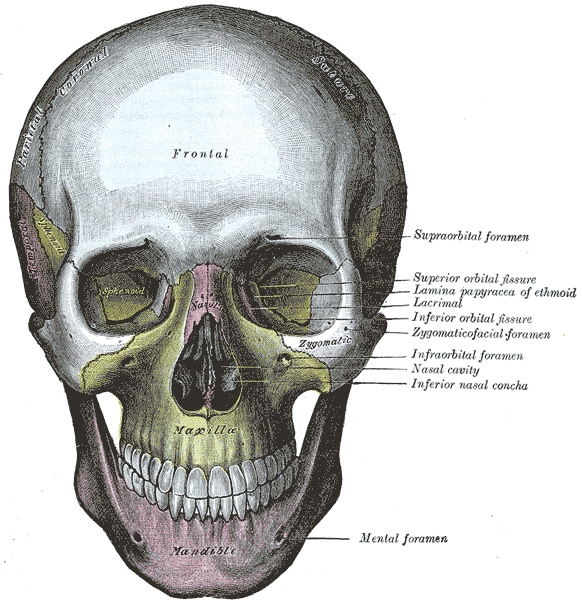
On the face, anterior to the angle of the mandible, on the anterior border of masseter, in the groove where the facial artery pulses.
How to locate: Ask the patient to clench the teeth so the masseter stands out; the point is just in front of its lower anterior border, anterior to the angle of the mandible, in the groove where the facial artery pulses against the bone.
Regional anatomy: The needle passes through the skin, subcutaneous tissue and platysma to the anterior border of the masseter, where the facial artery and vein cross the mandible.
Distances are in cun, a proportional unit — how to measure.

3D view
3D view not available for this point: its position on the 3D model couldn't be checked against its location text, so it is not shown. The 2D maps above show it.
Needling
Cited needling
Techniques — the source gives these as alternatives:
-
Oblique insertionDepth 0.3–0.5 cunskindeeper
-
Transverse insertion — to join with such points as Dicang ST4, Jiache ST6 etc
Depths describe average adult habitus in the cited population, never a single safe number for the patient in front of you. Palpate and adjust.
Sources (1)
- Deadman P, Al-Khafaji M, Baker K. A Manual of Acupuncture. Hove: Journal of Chinese Medicine Publications; 1998 — p. 133 Supports: techniques (names this point)
Site notes · not cited
- Avoid blood vessels
Functions
- Expels wind and relieves swelling of the face
- Benefits the teeth and jaw
Indications
Combinations Using This Point
Sources
- World Health Organization. WHO Standard Acupuncture Point Locations in the Western Pacific Region. Manila: WHO Regional Office for the Western Pacific, 2008. (Location.)
📝 Notes
Public notes from the community and your own private notes on ST5 Daying.
No notes yet.