
Traditionally used for
- Eye health
- Nerves & recovery
- Energy & fatigue
- Skin
Cautions & contraindications
- No deep needling
Location
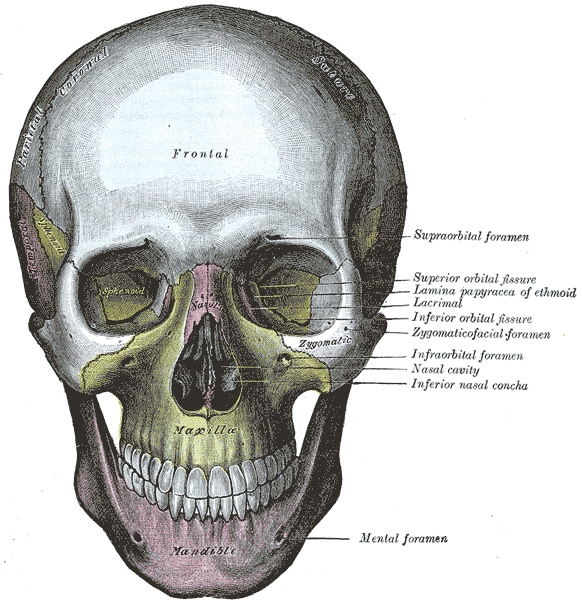
On the face, directly below the pupil, in the depression of the infraorbital foramen.
How to locate: With the patient looking straight ahead, follow a vertical line down from the centre of the pupil to the infraorbital ridge, then palpate just below it until the finger sinks into the small depression of the infraorbital foramen, which often lies slightly medial to the pupil line.
Distances are in cun, a proportional unit — how to measure.

3D view
3D view not available for this point: its position on the 3D model couldn't be checked against its location text, so it is not shown. The 2D maps above show it.
Needling
Cited needling
Techniques — the source gives these as alternatives:
-
Perpendicular insertionDepth 0.2–0.4 cunskindeeper
-
Transverse insertion — to join with such points as Quanliao SI18, Yingxiang LI20 etc
-
Oblique insertion — supero-laterally, along the infraorbital foramenDepth 0.3–0.5 cunskindeeper
Depths describe average adult habitus in the cited population, never a single safe number for the patient in front of you. Palpate and adjust.
Sources (1)
- Deadman P, Al-Khafaji M, Baker K. A Manual of Acupuncture. Hove: Journal of Chinese Medicine Publications; 1998 — p. 131 Supports: techniques (names this point)
Site notes · not cited
- No deep needling
Functions
- Expels wind, clears heat and benefits the eyes
- Activates the channel and relieves facial pain
Indications
Sources
- World Health Organization. WHO Standard Acupuncture Point Locations in the Western Pacific Region. Manila: WHO Regional Office for the Western Pacific, 2008. (Location.)
- Focks C, ed. Atlas of Acupuncture. Edinburgh: Churchill Livingstone Elsevier, 2008. (Locating method and actions.)
📝 Notes
Public notes from the community and your own private notes on ST2 Sibai.
No notes yet.