
素髎 (Sùliáo) — White Bone-Hole
Du (Governing) channel · point 25
Traditionally used for
- Nose & throat
- Blood pressure
Location
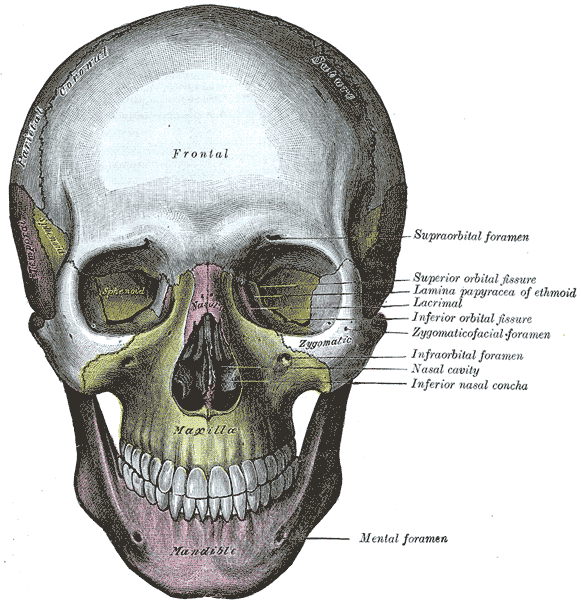
On the face, at the centre of the tip of the nose.
How to locate: At the tip of the nose, where a slight depression can usually be felt on palpation.
Regional anatomy: Vessels: the lateral nasal branches of the facial artery and vein. Nerves: the external nasal branch of the anterior ethmoid nerve.
Distances are in cun, a proportional unit — how to measure.
Needling
Cited needling
Techniques — the source gives these as alternatives:
-
Perpendicular insertionDepth 0.2–0.3 cunskindeeper
-
Transverse insertion — directed superiorlyDepth 0.5–1 cunskindeeper
-
Prick to bleed
Second source — Beijing College of Traditional Chinese Medicine, et al 1980, p. 269:
-
Perpendicular insertionDepth 0.2–0.3 in (≈5–8 mm)skindeeper
Depths describe average adult habitus in the cited population, never a single safe number for the patient in front of you. Palpate and adjust.
Sources (2)
- Deadman P, Al-Khafaji M, Baker K. A Manual of Acupuncture. Hove: Journal of Chinese Medicine Publications; 1998 — p. 558 Supports: techniques (names this point)
- Beijing College of Traditional Chinese Medicine, et al. Essentials of Chinese Acupuncture. Beijing: Foreign Languages Press; 1980 — p. 269 Supports: techniques (names this point)
Site notes · not cited
Functions
- Restores consciousness and raises yang
- Opens the nasal passages
Indications
Clinical Notes
Combinations Using This Point
Sources
- World Health Organization. WHO Standard Acupuncture Point Locations in the Western Pacific Region. Manila: WHO Regional Office for the Western Pacific, 2008. (Location.)
- Focks C, ed. Atlas of Acupuncture. Edinburgh: Churchill Livingstone Elsevier, 2008. (Locating method and actions.)
- Beijing College of Traditional Chinese Medicine, Shanghai College of Traditional Chinese Medicine, Nanjing College of Traditional Chinese Medicine, Acupuncture Institute of the Academy of Traditional Chinese Medicine. Essentials of Chinese Acupuncture. Beijing: Foreign Languages Press, 1980. (Regional anatomy.)
Professional contributions
Clinical notes and case studies from verified practitioners, reviewed by our team before they appear. Each entry is one practitioner's report — not editorial content, and not a dosing reference.
No professional contributions yet.
Verified professionals with a live directory listing can share clinical notes and case studies here.
📝 Notes
Public notes from the community and your own private notes on GV25 Suliao.
No notes yet.