
頷厭 (Hànyàn) — Jaw Serenity
Gallbladder channel · point 4
Traditionally used for
- Headaches
- Dizziness
- Eye health
- Ears & hearing
- Nerves & recovery
Location
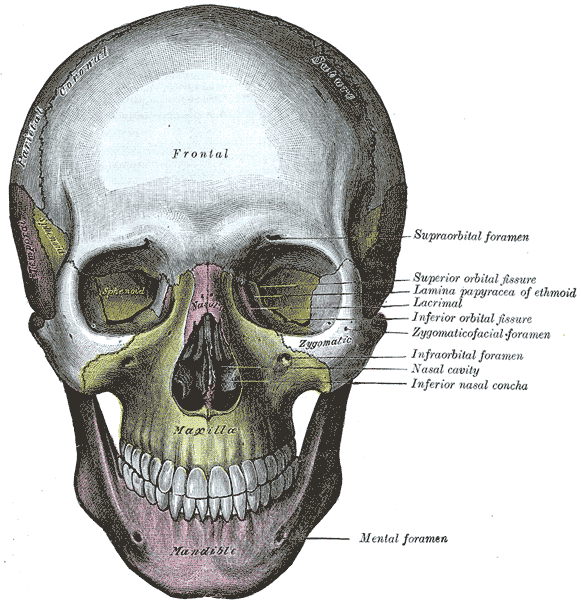
On the head, within the temporal hairline, at the junction of the upper quarter and lower three-quarters of the curved line connecting ST8 and GB7.
How to locate: With the patient seated or side-lying, find ST8 at the corner of the forehead hairline and GB7 in the temporal hairline level with the ear apex, and trace the curved line between them; the point is a quarter of the way down from ST8 (midway between ST8 and GB5), and the muscle moves under the finger when the patient clenches or chews.
Regional anatomy: Skin and subcutaneous tissue, then the temporal fascia and temporalis muscle.
Distances are in cun, a proportional unit — how to measure.
Needling
Cited needling
-
Transverse insertionDepth 0.5–1.5 cunskindeeper
Like all points within the hairline it may be needled in any direction — towards where the pain radiates, or through-needled to other head points — into the loose layer next to the skull rather than shallowly.
Second source — Beijing College of Traditional Chinese Medicine, et al 1980, p. 232:
-
Transverse-oblique insertion — posteriorlyDepth 0.3–0.5 in (≈8–13 mm)skindeeper
Depths describe average adult habitus in the cited population, never a single safe number for the patient in front of you. Palpate and adjust.
Sources (2)
- Deadman P, Al-Khafaji M, Baker K. A Manual of Acupuncture. Hove: Journal of Chinese Medicine Publications; 1998 — p. 424 Supports: techniques (names this point)
- Beijing College of Traditional Chinese Medicine, et al. Essentials of Chinese Acupuncture. Beijing: Foreign Languages Press; 1980 — p. 232 Supports: techniques (names this point)
Site notes · not cited
Functions
- Expels wind, clears heat and relieves migraine
- Benefits the eyes and ears
- Activates the channel
Indications
Combinations Using This Point
Sources
- World Health Organization. WHO Standard Acupuncture Point Locations in the Western Pacific Region. Manila: WHO Regional Office for the Western Pacific, 2008. (Location.)
- Focks C, ed. Atlas of Acupuncture. Edinburgh: Churchill Livingstone Elsevier, 2008. (Locating method and actions.)
Professional contributions
Clinical notes and case studies from verified practitioners, reviewed by our team before they appear. Each entry is one practitioner's report — not editorial content, and not a dosing reference.
No professional contributions yet.
Verified professionals with a live directory listing can share clinical notes and case studies here.
📝 Notes
Public notes from the community and your own private notes on GB4 Hanyan.
No notes yet.