
夾脊 (Jiájǐ) — Spinal Sides
Extra point · Extra (Back) · point EX-B2
Also known as Huatuo Jiaji, Hua Tuo's Paravertebral Points
Traditionally used for
- Nerves & recovery
- Pain & joints
Cautions & contraindications
- No deep needling
Location
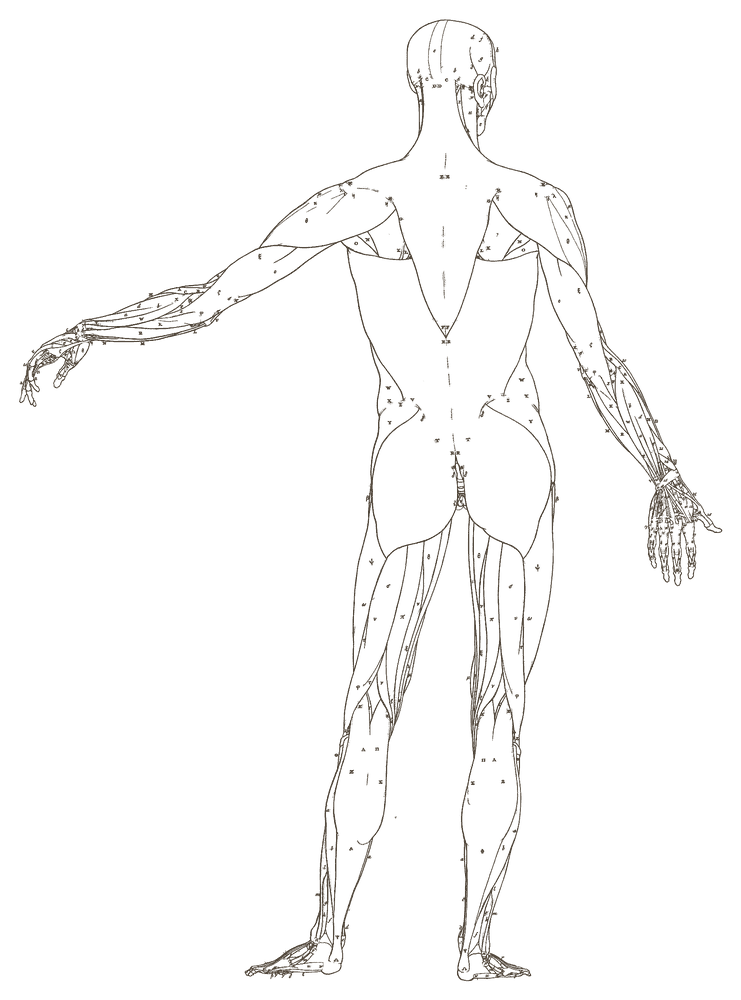
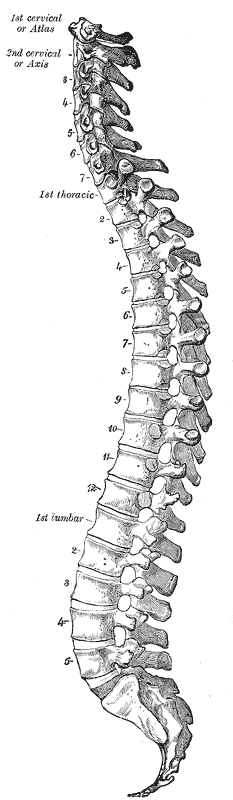
A set of 34 paired points on the back, 0.5 cun lateral to the lower border of each spinous process from T1 to L5.
How to locate: With the patient prone, choose the spinal segments to be treated, using the lower angle of the scapula (T7) or the line joining the iliac crests (L4) to count vertebrae; each point is 0.5 cun lateral to the lower border of the spinous process, over the facet joint.
Distances are in cun, a proportional unit — how to measure.
3D view
3D view not available for this point: its position on the 3D model couldn't be checked against its location text, so it is not shown. The 2D maps above show it.
Needling
- No deep needling
Functions
- Regulates the qi of the corresponding spinal segment and its organ
- Relieves pain and stiffness of the spine
- Treats the internal organs segmentally
Indications
Clinical Notes
Sources
- Focks C, ed. Atlas of Acupuncture. Edinburgh: Churchill Livingstone Elsevier, 2008. (Locating method and actions.)
📝 Notes
Public notes from the community and your own private notes on EX-B2 Jiaji.
No notes yet.