
魄戶 (Pòhù) — Door of the Corporeal Soul
Bladder channel · point 42
Traditionally used for
- Cough & breathing
- Pain & joints
Cautions & contraindications
- No deep needling
Location
On the upper back, 3 cun lateral to the lower border of the spinous process of T3.
How to locate: With the patient seated and the shoulders relaxed, the medial end of the scapular spine is usually level with the T3 spinous process (or count down three from C7). The point is 3 cun lateral to the lower border of T3, level with BL13 and GV12; with the shoulders relaxed and the arms hanging, 3 cun from the midline is at the medial border of the scapula.
Distances are in cun, a proportional unit — how to measure.
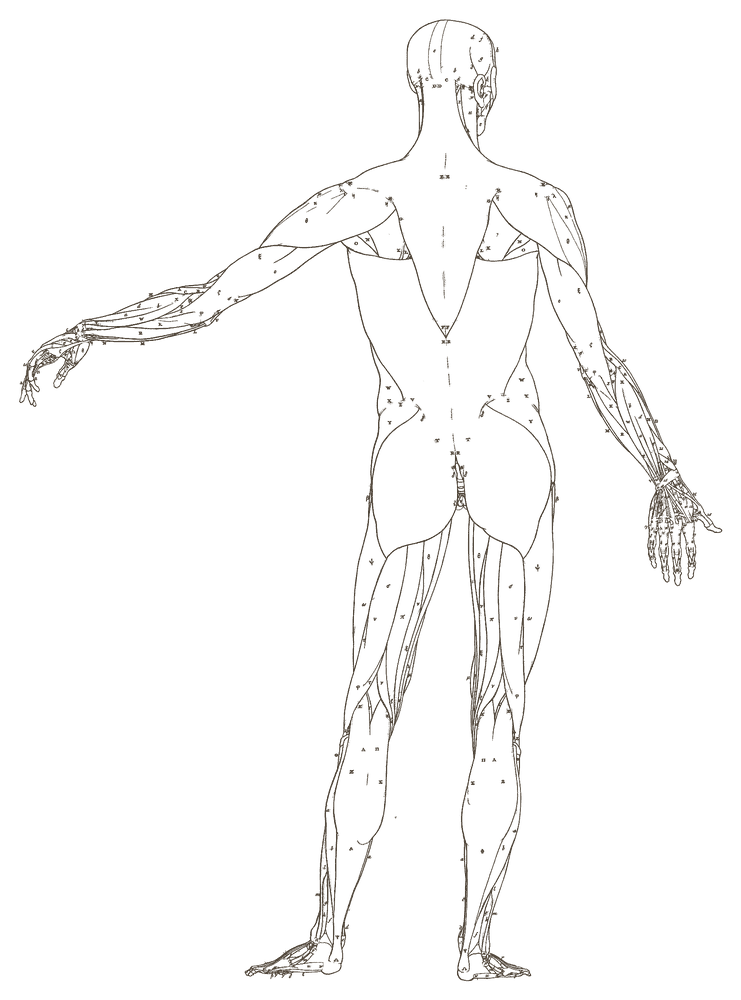
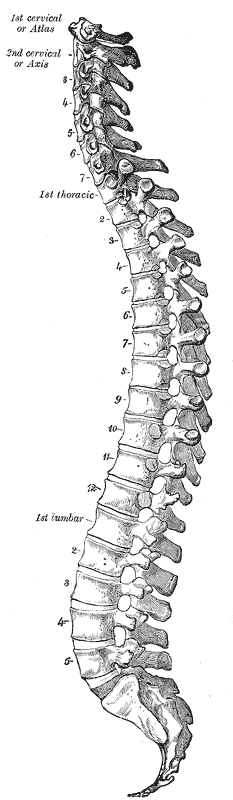 Needling hazard — see Needling safety
3D view
3D view not available for this point: its position can't be carried onto the 3D model reliably (it failed a placement check). The 2D maps above show it.
- The lung is not drawn: the anatomical model used here does not include it as a surface. This is a limit of the model, not of the anatomy. The pneumothorax risk above still applies.
Needling
Cited needling
- ⚠ Pneumothorax
-
Oblique insertionDepth 0.3–0.5 cunskindeeper
| Underweight | Normal | Overweight | |
|---|---|---|---|
| Men | 35.6 | 37.5 | 44.0 |
| Women | 26.0 | 35.3 | 43.5 |
CT-measured mean safe needling depths from Taiwanese adults, by sex and body size (Lin et al. 2013); population-specific and a guide only — adjust to the patient in front of you.
Depths describe average adult habitus in the cited population, never a single safe number for the patient in front of you. Palpate and adjust.
Sources (3)
- Lin JG, Chou PC, Chu HY. An exploration of the needling depth in acupuncture: the safe needling depth and the needling depth of clinical efficacy. Evid Based Complement Alternat Med. 2013;2013:740508 — Tables 9 (male) and 10 (female), back acupoints Supports: safe depth (measured)
- World Health Organization. Guidelines on basic training and safety in acupuncture. Geneva: WHO; 1999. WHO/EDM/TRM/99.1 — Section II §5.2 (Lung and pleura), p. 25 Supports: pneumothorax (names this region)
- Deadman P, Al-Khafaji M, Baker K. A Manual of Acupuncture. Hove: Journal of Chinese Medicine Publications; 1998 — p. 302 Supports: techniques (names this point)
Site notes · not cited
- No deep needling
Functions
- Tonifies and nourishes the Lung and descends rebellious qi
- Clears heat from the Lung
- Settles the corporeal soul and relieves grief
- Activates the channel and relieves pain
Indications
Clinical Notes
Sources
- World Health Organization. WHO Standard Acupuncture Point Locations in the Western Pacific Region. Manila: WHO Regional Office for the Western Pacific, 2008. (Location.)
- Focks C, ed. Atlas of Acupuncture. Edinburgh: Churchill Livingstone Elsevier, 2008. (Locating method and actions.)
📝 Notes
Public notes from the community and your own private notes on BL42 Pohu.
No notes yet.