
攢竹 (Cuánzhú) — Gathered Bamboo
Bladder channel · point 2
Traditionally used for
- Headaches
- Eye health
- Digestion
- Nerves & recovery
- Skin
Cautions & contraindications
- No moxibustion
- Avoid blood vessels
Location
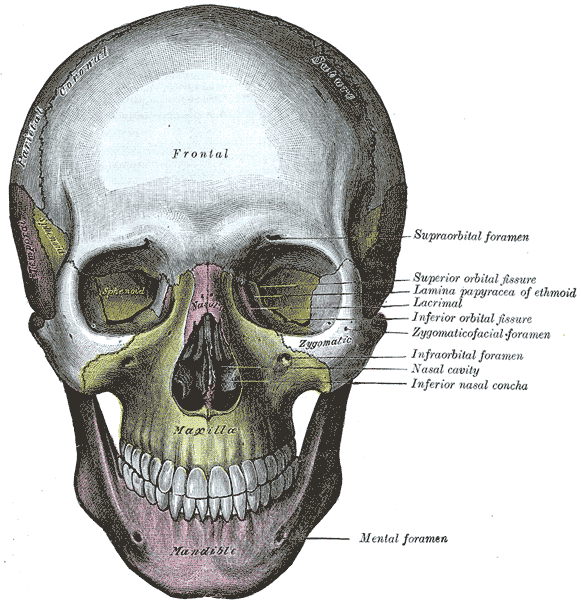
On the head, in the depression at the medial end of the eyebrow, directly above BL1, where the frontal notch can often be felt.
How to locate: Use the inner canthus (BL1) rather than the variable eyebrow as the guide: go straight up to the orbital ridge at the medial end of the eyebrow and feel for the frontal notch, usually a tender depression.
Regional anatomy: Vessels: the frontal artery and vein. Nerves: the medial branch of the frontal nerve.
Distances are in cun, a proportional unit — how to measure.
Needling
Cited needling
Techniques — the source gives these as alternatives:
-
Transverse-oblique insertion — inferiorly towards Jingming BL1 for eye diseases
-
Transverse insertion — lateral, to join with Yuyao (M-HN-6) for supraorbital pain
-
Prick to bleed — for heat disorders
Second source — Beijing College of Traditional Chinese Medicine, et al 1980, p. 175 (alternatives):
-
Transverse-oblique insertion — inferiorly or laterallyDepth 0.3–0.5 in (≈8–13 mm)skindeeper
-
Prick to bleed
Depths describe average adult habitus in the cited population, never a single safe number for the patient in front of you. Palpate and adjust.
Sources (2)
- Deadman P, Al-Khafaji M, Baker K. A Manual of Acupuncture. Hove: Journal of Chinese Medicine Publications; 1998 — p. 257 Supports: techniques (names this point)
- Beijing College of Traditional Chinese Medicine, et al. Essentials of Chinese Acupuncture. Beijing: Foreign Languages Press; 1980 — p. 175 Supports: techniques (names this point)
Site notes · not cited
- No moxibustion
- Avoid blood vessels
Functions
- Benefits the eyes, expels wind and clears heat
- Clears the head and relieves frontal headache
- Stops hiccup
Indications
Clinical Notes
Combinations Using This Point
Sources
- World Health Organization. WHO Standard Acupuncture Point Locations in the Western Pacific Region. Manila: WHO Regional Office for the Western Pacific, 2008. (Location.)
- Focks C, ed. Atlas of Acupuncture. Edinburgh: Churchill Livingstone Elsevier, 2008. (Locating method, actions and needling cautions.)
- Beijing College of Traditional Chinese Medicine, Shanghai College of Traditional Chinese Medicine, Nanjing College of Traditional Chinese Medicine, Acupuncture Institute of the Academy of Traditional Chinese Medicine. Essentials of Chinese Acupuncture. Beijing: Foreign Languages Press, 1980. (Regional anatomy.)
Professional contributions
Clinical notes and case studies from verified practitioners, reviewed by our team before they appear. Each entry is one practitioner's report — not editorial content, and not a dosing reference.
No professional contributions yet.
Verified professionals with a live directory listing can share clinical notes and case studies here.
📝 Notes
Public notes from the community and your own private notes on BL2 Zanzhu.
No notes yet.